Emergency Restoration System

What Is an Emergency Restoration System (ERS)?

An Emergency Restoration System (ERS) is a modular temporary transmission structure that rapidly restores power after tower failures, severe weather, maintenance, or line upgrades. Designed for fast transport, assembly, and deployment, ERS minimizes outage duration while permanent transmission infrastructure is repaired or replaced.

01. Tower Failure

Structural failure or severe weather disrupts transmission line operations.

02. ERS Mobilisation

Pre-positioned ERS systems are dispatched rapidly to the affected location.

03. ERS Installation

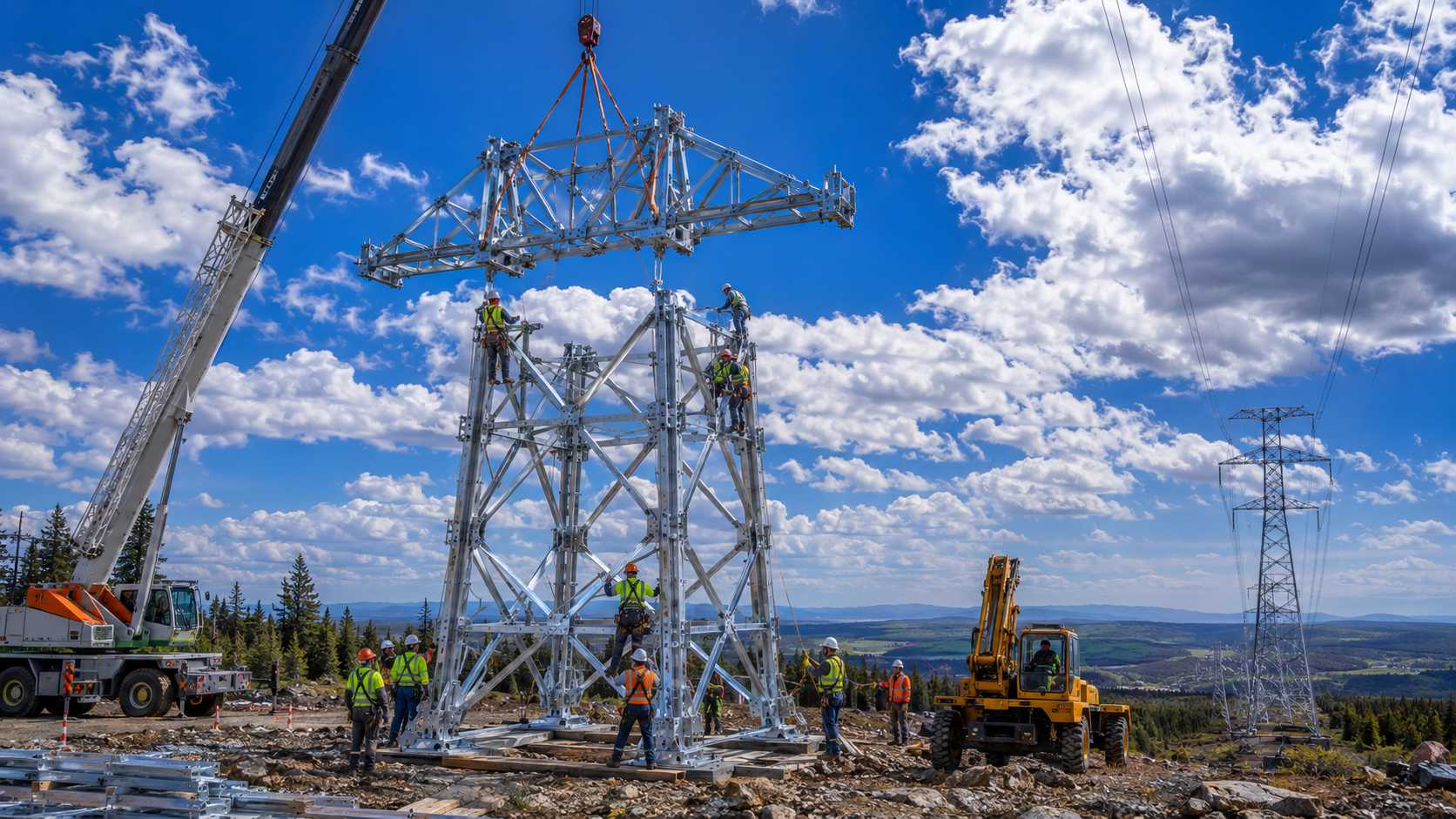
Field crews assemble and install ERS towers for rapid line restoration.

04. Power Restored

Transmission is safely re-energized within 72 hours of deployment.

05. Permanent Reconstruction

Permanent transmission towers are rebuilt while ERS maintains power flow.

Built for Rapid Restoration

Restore transmission quickly while permanent reconstruction is underway.

Conventional Reconstruction

Standard approach to tower failure

ERS Deployment

Emergency restoration approach

Detailed structural engineering review and design approval required
Pre-engineered modular system — no new design approval needed
New foundation construction — civil works on damaged site
Minimal civil requirements — ground anchor or pad foundation only
Tower fabrication and material procurement from supply chain
Pre-fabricated components available from maintained inventory
Extended logistics and transportation lead times
Rapid mobilisation from pre-positioned stock — within 24 hours
Sequential project schedule — no parallel workstreams
Field assembly by trained crew — parallel to damage assessment

Typical Timeline

Weeks to Months

Typical Timeline

24–72 Hours

Common Applications of Emergency Restoration Systems

Proven solutions for emergency and planned transmission projects.

Storm & Cyclone Damage

Rapidly restore transmission after storms and cyclones using ERS towers to minimize outages and maintain reliable grid operations.

Flood & Foundation Failure

Temporary ERS structures restore transmission where floods, erosion, or unstable foundations threaten permanent tower stability.

Tower Collapse

Rapid ERS deployment restores transmission after tower collapse, maintaining reliable power while permanent reconstruction is completed.

Wildfire Recovery

Restore transmission safely after wildfire damage using ERS towers to maintain grid reliability during infrastructure recovery efforts.

Planned Maintenance

Temporary ERS bypass structures maintain uninterrupted transmission during scheduled maintenance, repairs, and replacement projects.

Reconductoring Projects

Support conductor replacement and transmission upgrades with ERS structures while maintaining continuous and reliable power supply.

How Does an ERS Tower Restore Transmission Lines?

ERS towers are designed around speed, flexibility, and reliability. Their modular design enables utilities to rapidly restore service while permanent repairs are planned and executed.

STEP 01

Damage Assessment

Site survey and structural damage evaluation by field engineers.

STEP 02

Engineering Evaluation

Load analysis, configuration selection and design confirmation.

STEP 03

Configuration Selection

Suspension, Tension, Angle or Dead-End — Modular or Lattice.

STEP 04

Tower Mobilisation

Pre-positioned inventory dispatched to site within 24 hours.

STEP 05

Assembly & Installation

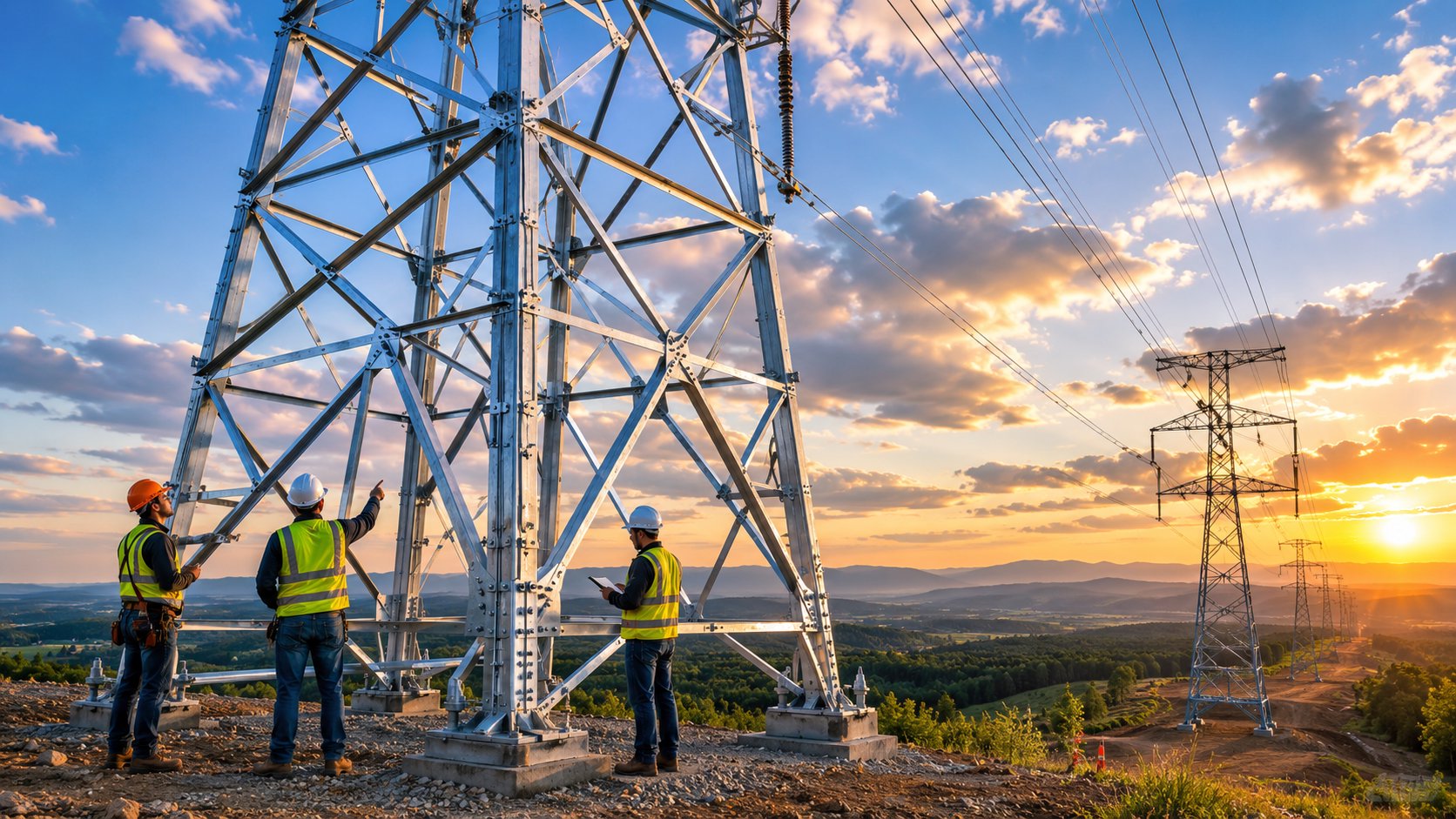
Field assembly by trained crew using gin pole or crane.

STEP 06

Conductor Stringing

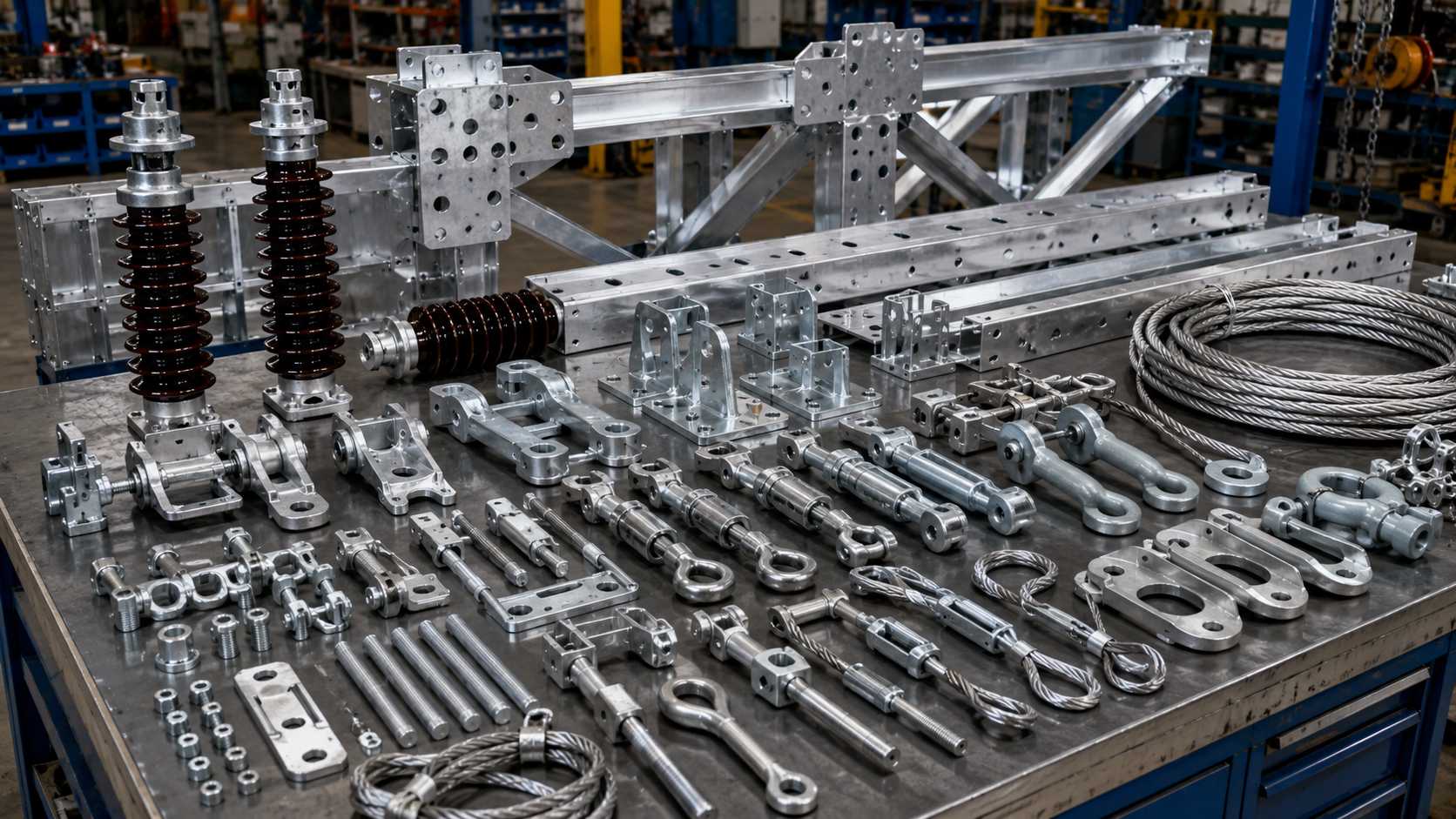
Conductor re-strung and insulator hardware installed.

STEP 07

Power Restored

Line energised and full transmission capacity restored.

Hover or tab through a step for details

STEP 01

Damage Assessment

Site survey and structural damage evaluation by field engineers.

STEP 02

Engineering Evaluation

Load analysis, configuration selection and design confirmation.

STEP 03

Configuration Selection

Suspension, Tension, Angle or Dead-End — Modular or Lattice.

STEP 04

Tower Mobilisation

Pre-positioned inventory dispatched to site within 24 hours.

STEP 05

Assembly & Installation

Field assembly by trained crew using gin pole or crane.

STEP 06

Conductor Stringing

Conductor re-strung and insulator hardware installed.

STEP 07

Power Restored

Line energised and full transmission capacity restored.

Modular and Lattice ERS Tower Solutions

ERS towers are available in both modular and lattice configurations, allowing utilities to select the most appropriate solution based on loading requirements, deployment conditions, and project objectives.

Modular ERS

Modular ERS Towers

Modular ERS towers consist of lightweight prefabricated aluminium sections designed for rapid transportation and assembly. Their flexibility and ease of deployment make them particularly suitable for emergency restoration projects where speed is critical. Components can be carried by hand and assembled without heavy machinery — ideal for remote and difficult-access terrain.

Lattice ERS

Lattice ERS Towers

Lattice ERS towers utilise a trussed structural framework that offers excellent rigidity and load-carrying capability. They are commonly used in applications requiring higher structural performance or where a configuration closer to a conventional transmission tower is preferred. Lattice type towers deliver superior performance in high-load, high-voltage scenarios.

Parameter Modular ERS Lattice ERS
Assembly Speed Faster Moderate
Transportation Easier Larger Components
Weight Lighter Heavier
Structural Rigidity Good Excellent
Emergency Deployment Excellent Very Good
High Load Applications Good Excellent
Reusability Excellent Excellent
Explore All ERS Configurations

View Suspension, Tension, Angle and Dead End types across both structural forms.

Key Benefits of Emergency Restoration Systems

Proven solutions for emergency and planned transmission projects.

Rapid Power Restoration

Restore transmission within hours to minimize outages and maintain reliable power delivery.

Reduced Economic Impact

Reduce outage costs by restoring transmission quickly and protecting critical operations.

Reusable System Design

Reusable ERS components support multiple deployments for long-term operational efficiency.

Flexible Deployment

Deploy ERS solutions across emergency, maintenance, and transmission upgrade projects.

Minimal Civil Requirements

Deploy ERS with minimal site preparation where permanent foundations are impractical.

Remote Area Suitability

Reliable ERS deployment across mountains, flood zones, forests, and remote locations.

Scalable Across Voltage Levels

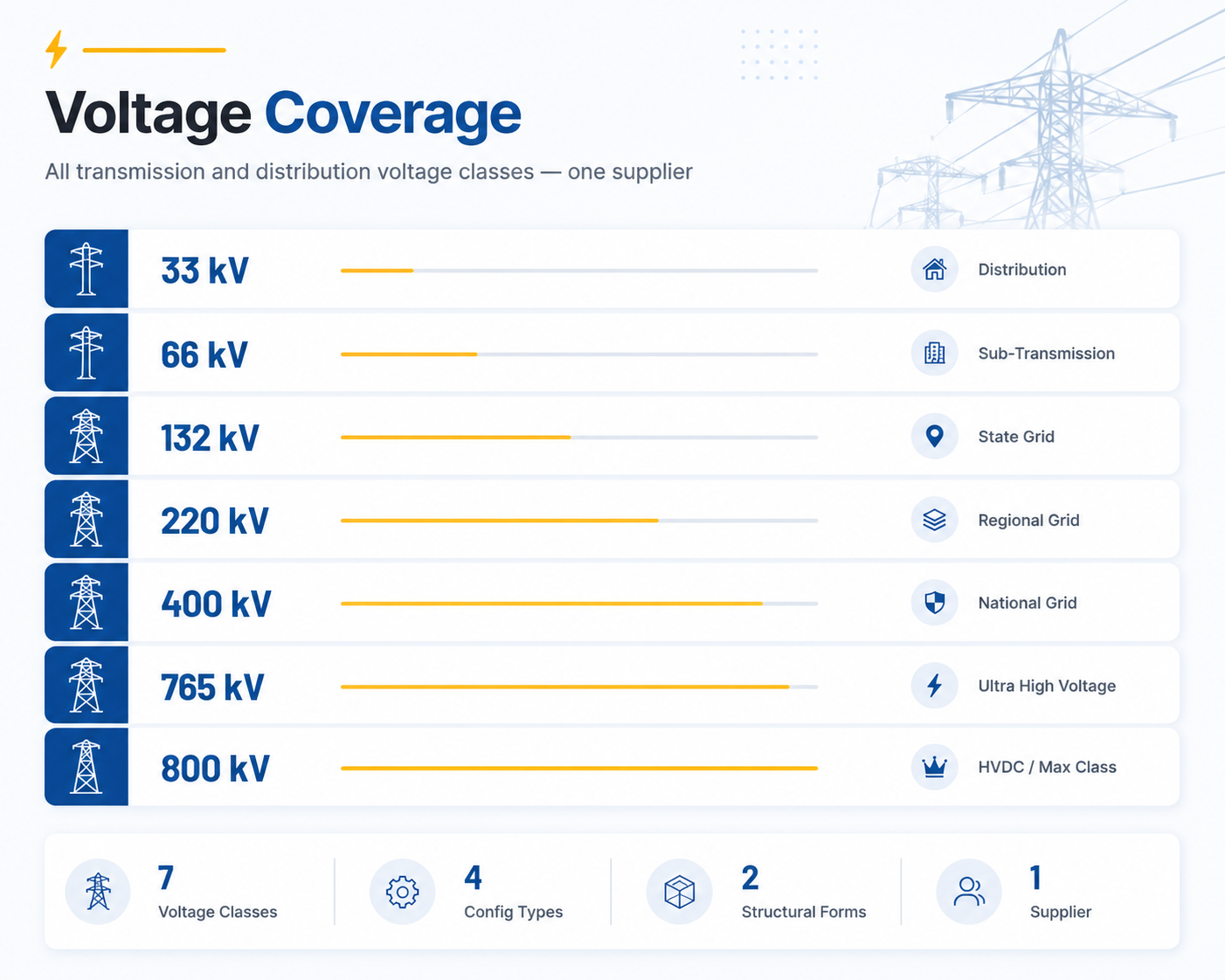
One ERS solution supports transmission networks from 33kV to 800kV with scalability.

Supports Planned Outages

Maintain uninterrupted transmission during scheduled maintenance and infrastructure upgrades.

Technical Capability Overview

Parameter Specification
Voltage Range 33kV – 800kV
Tower Types Suspension · Tension · Angle · Dead End
Structural Forms Modular & Lattice
Applications Emergency · Maintenance · Bypass · Reconductoring
Primary Standard IEEE 1070-2006
Load Testing IEC 60652
Design Software PLS-CADD
Material Testing NABL Accredited Labs
Technology Origin CSIR-SERC Indigenous
Deployment Time 72 Hours
Rental Programme India's First

Navigate the Supply Ecosystem

Explore complete ERS supply solutions—from manufacturing to installation and support.

Why Industry Trusts Hi-Tech

Reliable manufacturing for critical transmission projects.

Frequently Asked Questions

Everything you need to know about HiTech ERS solutions, capabilities, and standards.

What is an Emergency Restoration System?

An Emergency Restoration System (ERS) is a temporary modular transmission tower structure designed to rapidly restore power transmission following tower failures, extreme weather events, maintenance outages, or line upgrades. ERS towers can be deployed in days instead of the weeks or months required for permanent tower reconstruction.

ERS towers are temporary structures typically intended for use during emergency or maintenance periods, which may range from a few weeks to several months. The exact duration depends on the project, regulatory requirements, and how quickly permanent reconstruction can be completed. They are not intended to replace permanent towers indefinitely.

HiTech can mobilise ERS inventory within 24 hours of emergency call. Full on-site installation and line energisation is typically completed within 72 hours of site arrival, depending on terrain, voltage class, tower configuration, and installation method selected.

HiTech ERS towers support all major transmission voltage classes from 33kV to 800kV, including 33kV, 66kV, 132kV, 220kV, 400kV, 765kV, and 800kV (HVDC). This is the widest voltage coverage offered by any single ERS manufacturer in India.

Permanent towers require full structural engineering, new foundation construction, fabrication, and extended project timelines — often months. ERS towers are modular, pre-engineered, and designed for rapid field assembly with minimal civil work, enabling power restoration in days. ERS towers are temporary structures intended to be removed once permanent reconstruction is completed.

Yes. ERS tower components are specifically designed for multiple deployments. After a project is complete, towers are dismantled, inspected, maintained, and returned to inventory for redeployment on future projects. This reusability makes the ERS rental model economically viable.

Yes. HiTech offers India's first structured ERS rental programme, allowing utilities and contractors to deploy ERS towers without capital expenditure. Rental packages include delivery to site, technical deployment support, and full retrieval on project completion. Rental is available for both emergency and planned project applications.

ERS towers are used by power transmission utilities (PGCIL, State TRANSCOs), EPC contractors, power generation companies, renewable energy developers, government agencies, defence establishments, railway electrification projects, and industrial plants with captive power requirements.

HiTech ERS towers are designed based on IEEE 1070-2006 principles and load-tested to IEC 60652. Tower analysis is conducted using PLS-CADD software. The structural design methodology aligns with CSIR-SERC indigenous technology. Materials are tested at NABL-accredited laboratories. Complete certification documentation is available for government tenders and utility procurement.

Yes — and this is one of the most common applications. ERS towers are installed in parallel with existing structures to maintain live power during scheduled maintenance, foundation repair, angle or tension tower replacement, or reconductoring work. This allows utilities to complete maintenance with zero outage to the grid.