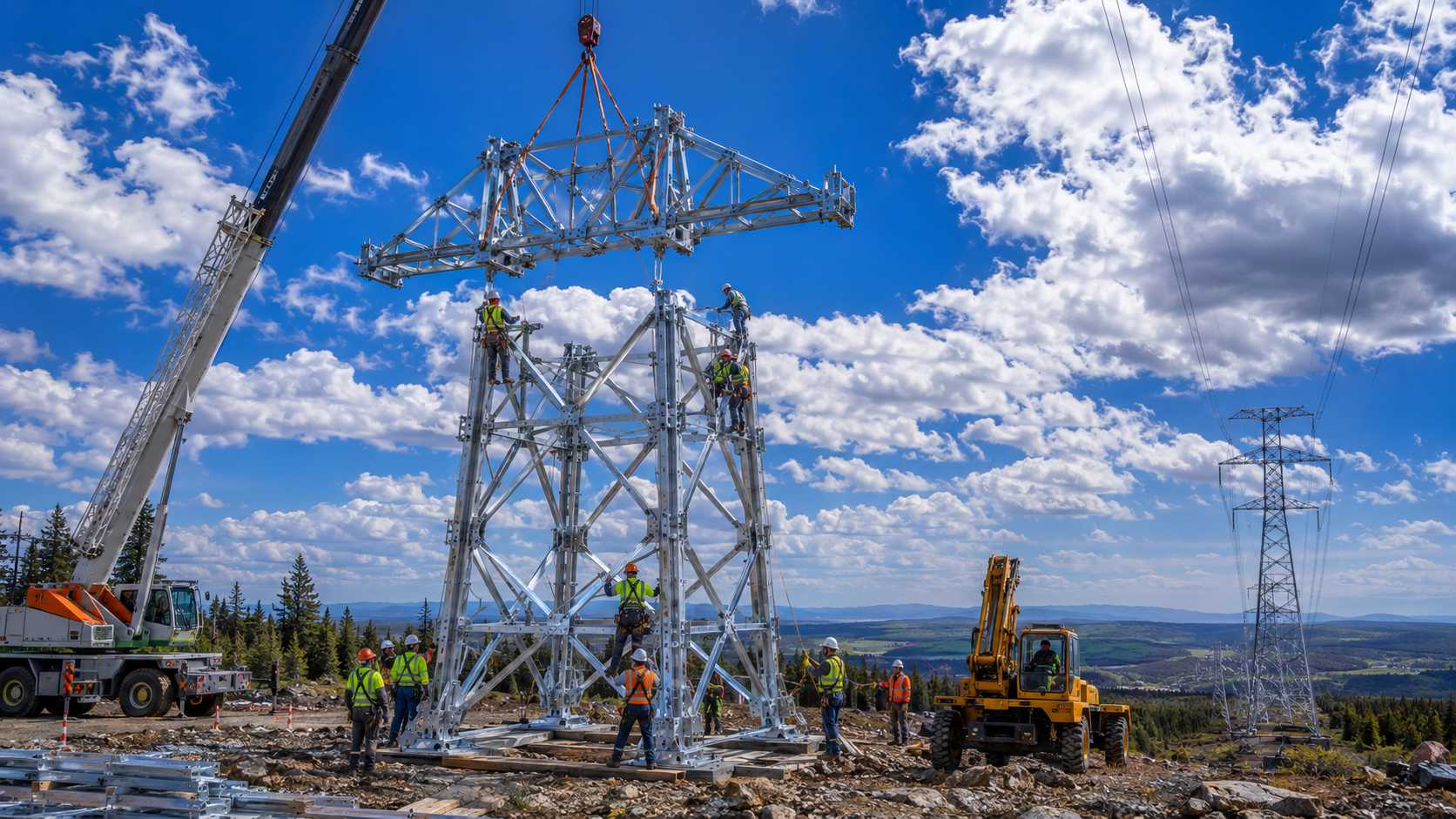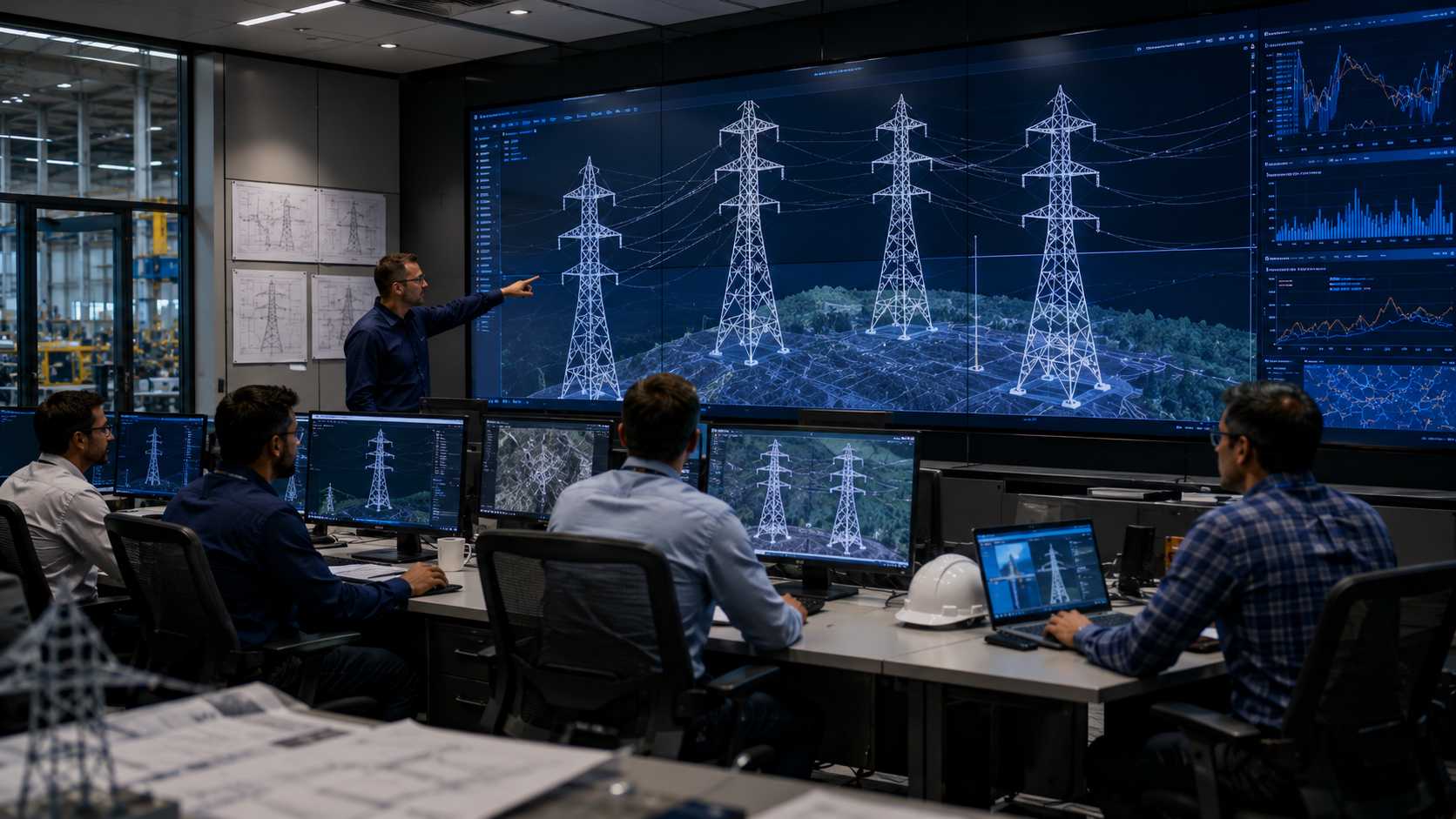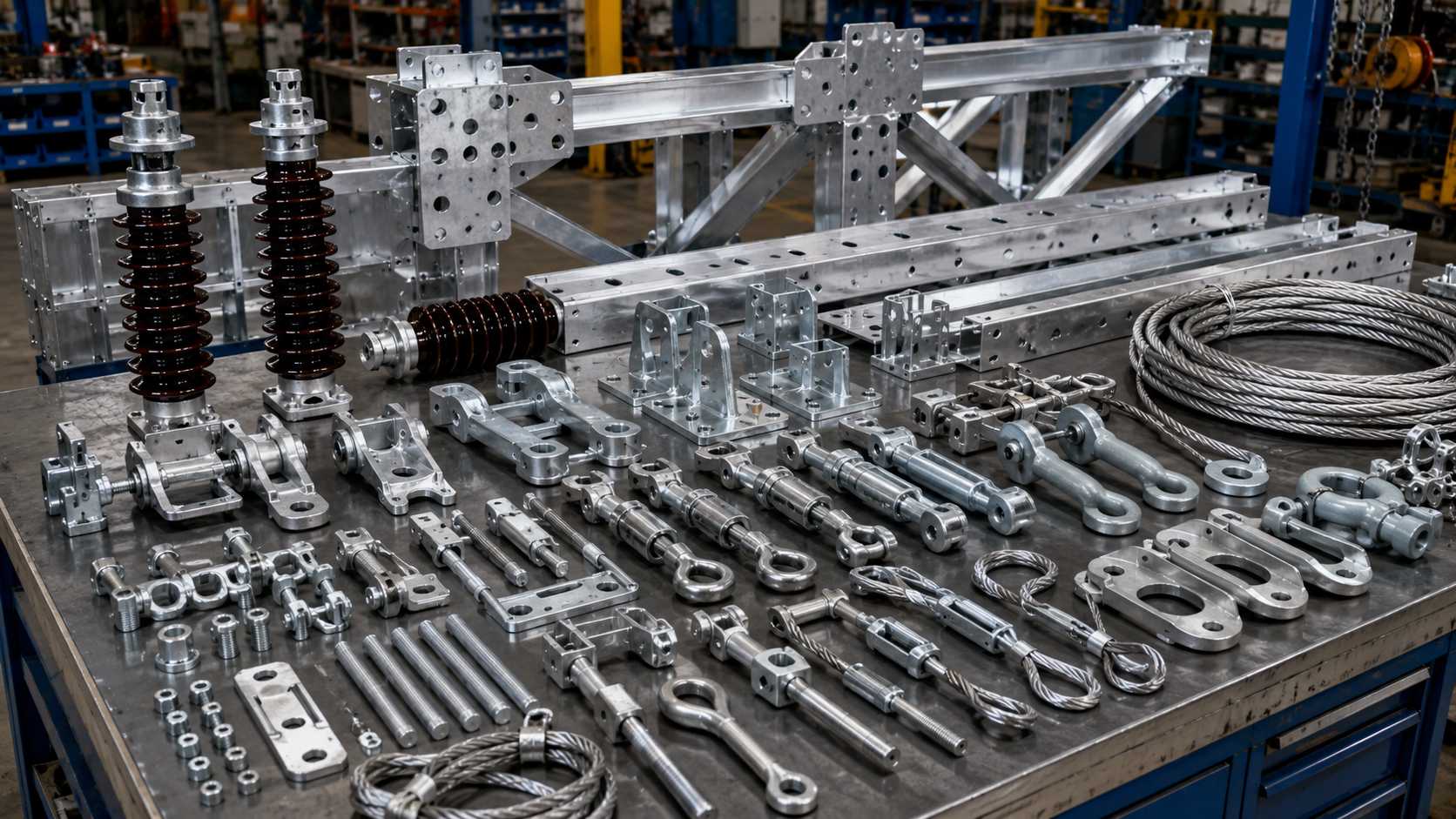
Our ERS training programs and engineering software equip utility professionals with the knowledge, digital tools, and practical expertise required for effective emergency restoration planning and execution. Through interactive simulations, configuration analysis, deployment planning, and technical workshops, teams gain the confidence to make faster decisions, improve coordination, and ensure safe, efficient ERS implementation.

Practical ERS training for confident field and engineering teams.

Digital tools simplify ERS planning, analysis, and configuration design.
Interactive simulations improve readiness and deployment decisions.
When transmission outages occur, response speed and execution quality depend heavily on preparation. Organizations that invest in training, planning, and simulation can significantly improve decision-making, coordination, and restoration efficiency.
The difference between a rapid restoration and an extended outage is often determined not in the field — but in the planning and preparedness work completed beforehand. Hi-Tech's training and software programs are designed to close that gap.
Trained staff with ERS knowledge and deployment familiarity before the event occurs.
Preparation reduces decision time, enabling teams to act confidently under pressure.
Shared planning and simulation experience strengthen cross-team coordination and response.
Prepared teams restore transmission faster, reducing outage duration and customer impact.
Strengthen grid resilience through continuous preparedness and lasting knowledge retention.
Complete ERS project support from engineering to final tower retrieval.

Build a strong ERS foundation covering concepts, applications, deployment methods, and restoration principles for utility and field teams.

Learn to select the right ERS configuration based on route geometry, loading conditions, voltage class, and project requirements.
Understand ERS installation workflows, field assembly, safety practices, and coordination between engineering and site teams.
Develop emergency response strategies, restoration workflows, and planning methods to improve outage readiness and execution.
Tailored ERS training for utility operations, maintenance, and asset management teams to strengthen restoration capabilities.
Practical ERS training for EPC contractors covering deployment methods, safety awareness, installation skills, field operations.
Digital tools enable smarter restoration planning and better deployment readiness before execution.

Analyze transmission corridors and restoration routes — identifying optimal ERS positioning and potential obstacles before deployment decisions are made.

Plan ERS positioning and deployment strategies — organizing tower placement, configuration selection, and installation sequencing before field teams mobilize.
Evaluate outage situations and restoration approaches — modelling different scenarios to identify the most effective response strategies before an event occurs.

Improve planning through visual modelling, enabling teams to review ERS configurations, site layouts, and corridor assessments with greater clarity.

Assess manpower, equipment, and logistics for restoration projects, ensuring teams have the visibility needed for efficient deployment planning.

Support planning, reporting, and operational workflows, maintaining accurate records of restoration plans, configuration choices, and project decisions.
Simulation tools improve planning, decision-making, and restoration preparedness before deployment.

Outage scenario defined.

Digital scenario modelling.

ERS system evaluation.
Route & positioning strategy.
Coordinated action plan.

Team prepared & confident.
Simulation tools improve planning, decision-making, and restoration preparedness before deployment.

Build ERS readiness for utility operations, asset management, and emergency response.
Strengthen transmission resilience through effective ERS outage planning and response.
Improve network reliability with ERS readiness for maintenance and restoration projects.
Equip EPC teams with practical ERS knowledge for safe field deployment and restoration.
Prepare field teams for planned maintenance and emergency ERS deployment activities.
Enable rapid ERS deployment with coordinated emergency restoration preparedness.

Support resilient transmission planning with ERS engineering and restoration expertise.
Improve network resilience through ERS planning and infrastructure preparedness.
Digital tools enable smarter restoration planning and better deployment readiness before execution.

Develop ERS restoration plans, team readiness, and coordinated response frameworks before transmission emergencies occur.

Prepare for storms with ERS planning, rapid deployment, and operational readiness before severe weather events.

Integrate ERS into asset management for maintenance planning, network resilience, and restoration preparedness.

Prepare maintenance teams for ERS bypass deployment, improving outage planning, scheduling, and execution.

Support reconductoring projects with ERS planning, team coordination, and conductor replacement execution.
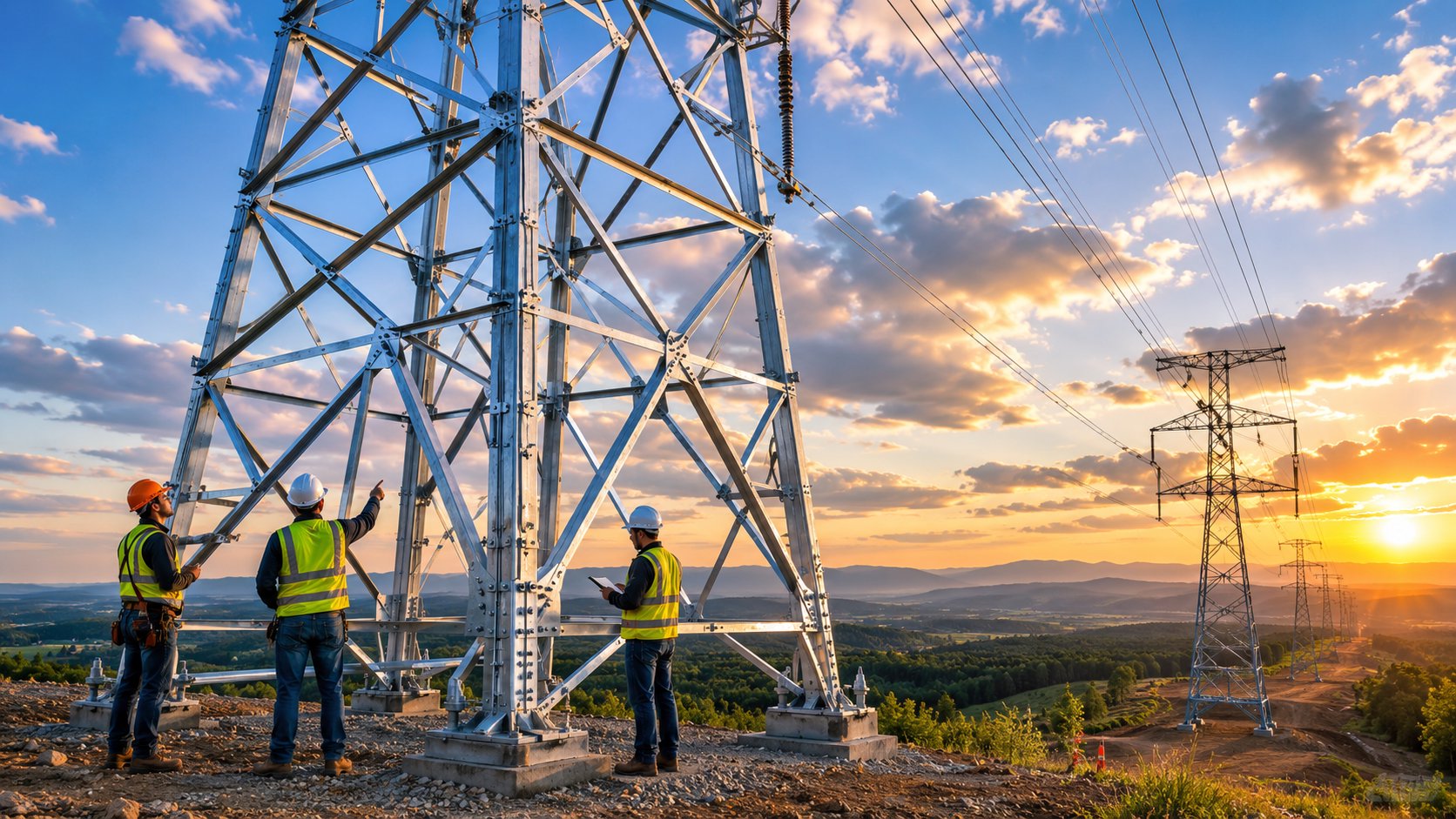
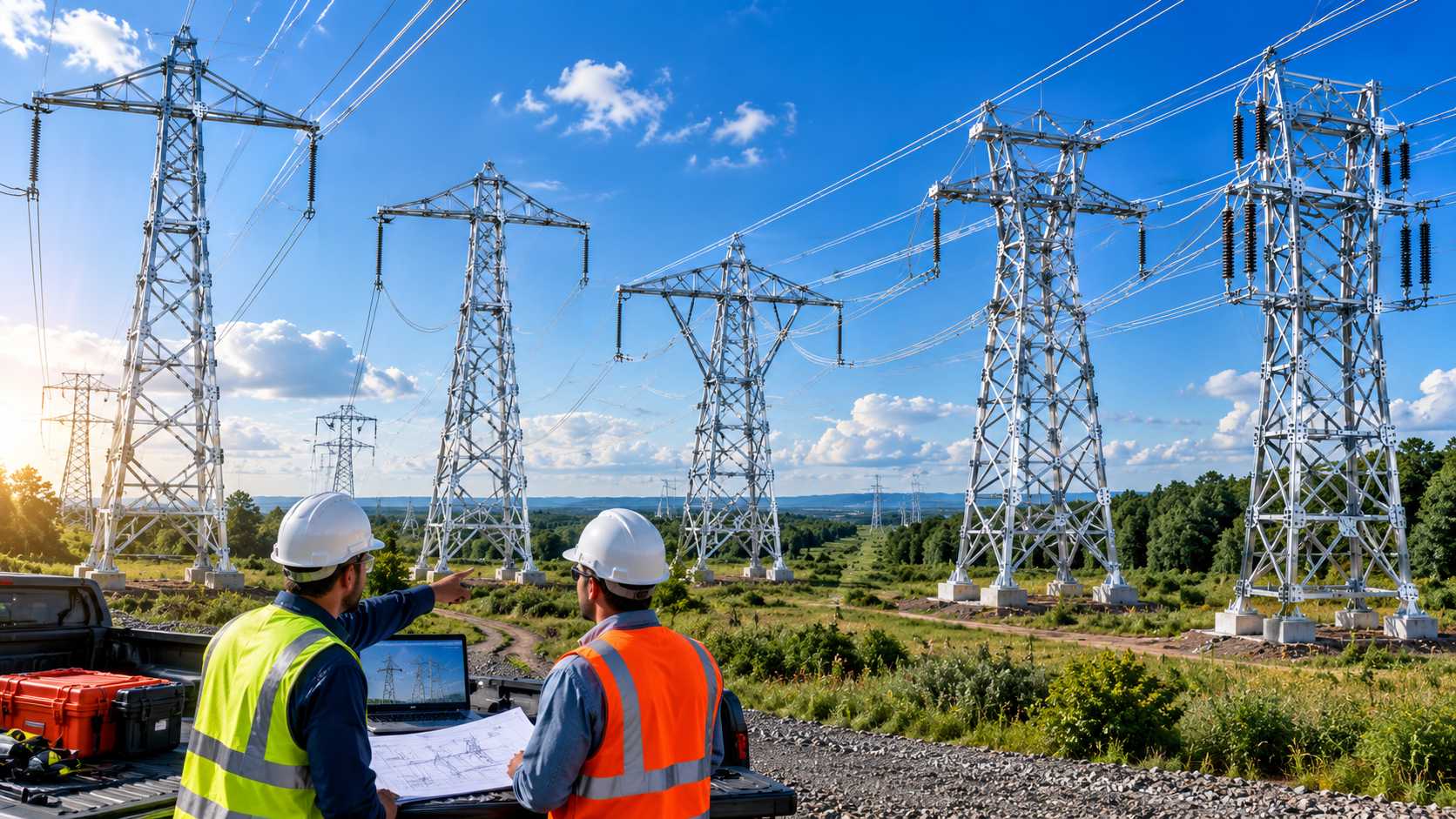
Strengthen utility-wide ERS readiness across operations, engineering, maintenance, and emergency response teams.

Develop disaster recovery strategies using ERS to restore transmission systems safely, efficiently, and with confidence.

Support reconductoring projects with ERS planning, team coordination, and conductor replacement execution.
Explore complete ERS supply solutions—from manufacturing to installation and support.
Complete ERS tower solutions engineered for rapid deployment, reliable restoration, and long-term grid resilience.
Choose modular ERS configurations including suspension, tension, angle, dead-end, and custom tower solutions.
Precision-built ERS towers using certified materials, advanced fabrication, and strict international quality standards.
Professional installation support ensuring safe deployment, efficient erection, and dependable system commissioning.
Comprehensive ERS training, planning software, and field guidance for confident deployment and operation.
Certified ERS hardware, insulators, anchors, connectors, and accessories for dependable field performance.
Reliable manufacturing for critical transmission projects.

In-house engineering specialists deliver ERS tower design, structural analysis, IEEE 1070 compliance, and advanced PLS-CADD solutions for every project.
Complete in-house manufacturing ensures strict quality control from raw materials to finished ERS tower components with reliable and consistent production.
Flexible ERS rental solutions provide immediate system availability with complete logistics support for utilities and EPC contractors across projects.
Expert installation teams provide tower erection, conductor stringing, commissioning, and complete field support for safe and efficient ERS deployment.

Pre-positioned ERS inventory and dedicated response teams ensure rapid mobilization with round-the-clock engineering support during critical outages.
One trusted partner manages every ERS project stage from engineering and deployment to commissioning, decommissioning, and tower retrieval.
Everything you need to know about HiTech ERS solutions, capabilities, and standards.
Hi-Tech ERS towers are available in five configurations: Suspension (for straight routes), Running Angle (for directional changes), Dead-End/Tension (for high-load termination and crossings), Herringbone (twin-mast multi-circuit), and Chainette (portal-style wide corridor). Each is engineered for a specific functional role within a transmission corridor.
A Suspension configuration supports conductors on straight or near-straight transmission sections where conductor loads are balanced transversely. It is the most common ERS configuration used for emergency bypass lines, reconductoring corridors, and temporary restoration routes along straight alignments.
A Running Angle configuration is used where the transmission line changes direction — at deviation angles typically between 2° and 30°. The cross arm and structure are designed to handle the resultant horizontal conductor load created by the change in line direction, making it suitable for route diversions and corridor adjustments.
A Dead-End or Tension configuration is required wherever the full longitudinal conductor tension must be transferred to the structure — at line terminations, river crossings, long spans, section boundaries, and critical restoration anchor points. These structures are significantly more robust than suspension types and are typically guyed for additional stability.
The Herringbone is a twin-mast ERS arrangement where two vertical masts are connected by cross-bracing in a herringbone pattern. This configuration provides significantly increased structural capacity, making it suitable for multi-circuit systems, heavy-duty restoration projects, and complex loading conditions that exceed the capacity of single-mast configurations.
The Chainette is a portal-style ERS structure designed for wider transmission corridors and special crossing requirements. Its wide base and horizontal top beam allow it to span greater widths than conventional mast configurations, making it the configuration of choice for portal structure replacements and wide corridor crossings.
Yes — in fact, most ERS restoration routes use multiple configurations. A typical route will use Dead-End configurations at each terminal, Suspension configurations across straight sections, and Running Angle configurations wherever the route changes direction. Configuration selection is performed section-by-section based on the engineering requirements at each location.
Configuration selection follows a structured engineering evaluation covering route geometry, tower function, conductor loading, span length, circuit arrangement, voltage level, weather loads, foundation conditions, and access constraints. Hi-Tech's engineering team performs this evaluation for each project to ensure the deployed configuration matches the specific requirements of the transmission corridor.
River crossings require Dead-End/Tension configurations on both banks of the crossing. The dead-end structures anchor the long span conductors across the water body, absorbing the full longitudinal tension generated by the extended span. Suspension towers on either side of the dead-ends carry the normal balanced loads on the approach sections.
Yes. All five Hi-Tech ERS configurations — Suspension, Running Angle, Dead-End/Tension, Herringbone, and Chainette — are available for deployment on systems from 33kV through to 800kV, including 400kV EHV and 765kV UHV corridors. Configuration dimensions, structural capacities, and insulator string arrangements are engineered to suit the specific voltage class requirements.