ERS Rental

Flexible ERS Rental Solutions for Emergency Projects.

Access deployment-ready Emergency Restoration System (ERS) solutions without the cost of permanent ownership. Hi-Tech's flexible rental programs provide fully engineered ERS towers, components, and support services for emergency restoration, planned maintenance, reconductoring, temporary bypass systems, and transmission upgrades. With rapid mobilization, flexible rental durations, and engineering support, utilities and EPC contractors can respond confidently to any project requirement.

Flexible Rental Programs

Deployment-ready ERS rentals tailored for emergency and planned projects.

Rapid Mobilization

Reserved inventory available for fast deployment and restoration support.
Engineering-Backed Rental

Expert engineering support with every ERS rental solution.

Training Programs for Without Long-Term Ownership

Deployment-ready ERS rental solutions that eliminate permanent inventory costs while keeping your utility prepared for emergency and planned transmission projects.

01. No Capital Investment

Access deployment-ready ERS systems without purchasing permanent inventory, preserving capital for core operations and strategic projects.

02. Emergency Readiness

Reserved ERS inventory remains deployment-ready for rapid emergency response, minimizing delays during unexpected transmission outages.
03. Flexible Rental Duration

Choose short or long-term ERS rental programs that align with emergency restoration, maintenance, or transmission project schedules.
04. Reduced Storage Burden

Avoid the cost, space, and management burden of maintaining large ERS inventories at your facility when systems are not regularly required.

05. Project-Based Access

Access only the ERS systems your project requires, providing flexible equipment availability without unnecessary long-term commitments.
05. Deployment Support

Receive engineering, logistics, installation, and restoration expertise alongside rental equipment for seamless project execution.

A Simple & Flexible Rental Process

From initial requirement through to post-project return or extension, the ERS rental process is designed to remove complexity and accelerate access to deployment-ready systems.

01

Requirement Assessment

Project type, duration, and configuration needs evaluated

02

Configuration Selection

Appropriate ERS configurations identified for the project

03

Inventory Reservation

Required inventory reserved and confirmed for your project

04

Storage Option

Customer facility or ERS warehouse — your choice

05

Mobilisation

Inventory dispatched with deployment support coordination

06

Deployment

ERS systems installed and transmission restored

07

Return or Extension

Return at project completion or extend rental duration

Choose the Storage Model That Fits Your Operational Strategy

Hi-Tech offers two flexible inventory storage options — designed around what works best for your utility's operational readiness strategy and project requirements.

A
Option A Customer Warehouse Storage

Inventory at Your Facility — Immediate Access When You Need It

ERS inventory can be reserved and positioned at your warehouse or facility to ensure immediate availability whenever deployment is required — eliminating mobilization delays in time-critical scenarios.

Fastest possible deployment access — zero transit lead time from storage to site

Utility-controlled inventory visibility and readiness confirmation

Maximum emergency preparedness — inventory already on your premises

Minimized mobilization time for both planned and emergency deployments
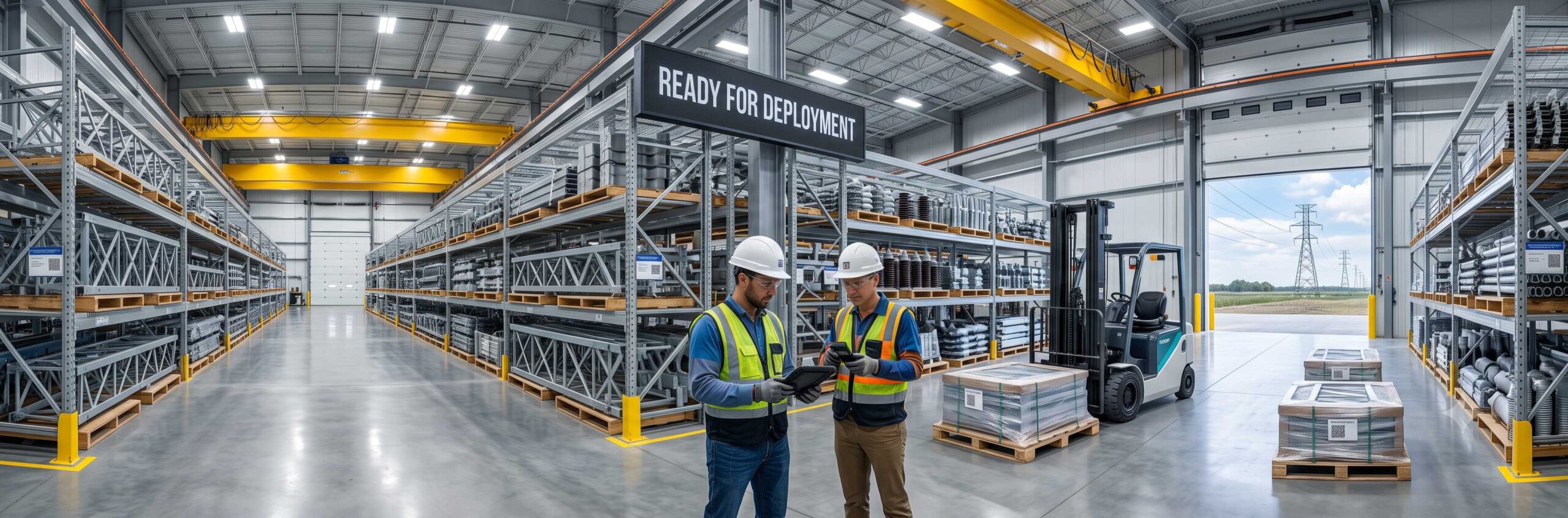
Option A - Customer Warehouse Storage
B
Option B Hi-Tech Warehouse Storage

Inventory Held at Hi-Tech — No Storage Burden, Full Readiness

ERS inventory can remain reserved and securely stored within Hi-Tech facilities until deployment is requested — providing access to ready inventory without any storage management responsibility on your end.

No warehouse space, facilities, or storage management required

Reduced inventory management and maintenance responsibilities

Secure, professionally maintained inventory holding at Hi-Tech facilities

Reserved and available for dispatch when your project requires deployment
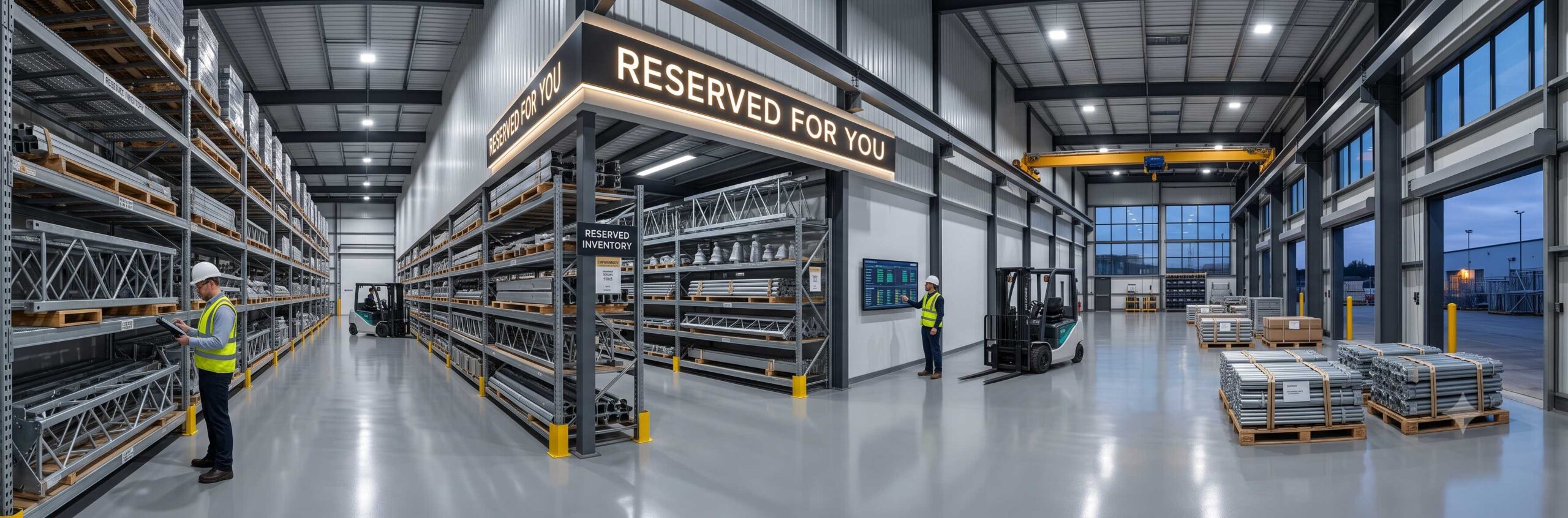
Option B - Hi-Tech Warehouse Storage

Reserved ERS inventory can be maintained either at your facility or within Hi-Tech warehouses — based on your project requirements, operational strategy, and rental agreement. Both options provide access to deployment-ready systems when you need them.

Supporting Planned Projects & Emergency Restoration Requirements

Hi-Tech ERS rental solutions serve the full range of temporary transmission scenarios — from emergency response to long-horizon planned projects.

01
Emergency Restoration Icon
01 / 06

Emergency Restoration

Rapid access to reserved ERS inventory following unexpected outages, tower failures, or transmission corridor damage — minimizing time to restoration.

Emergency Access
02
Storm Recovery Icon
02 / 06

Storm Recovery

Temporary transmission support deployed rapidly following cyclone, flood, or severe weather events affecting grid infrastructure and requiring bypass solutions.

Rapid Response
03
Planned Maintenance Icon
03 / 06

Planned Maintenance

Rental bypass structures for scheduled maintenance activities — ensuring transmission continuity during planned infrastructure work without permanent ownership.

Scheduled Project
04
Reconductoring Projects Icon
04 / 06

Reconductoring Projects

Temporary ERS support during conductor replacement programmes — rental duration matched to the project timeline without long-term ownership commitment.

Infrastructure Upgrade
05
Transmission Upgrades Icon
05 / 06

Transmission Upgrades

Network support structures during planned infrastructure improvement programmes — temporary access for the duration of the upgrade project.

Network Investment
06
Temporary Bypass Systems Icon
06 / 06

Temporary Bypass Systems

Alternative transmission routing during project execution — rental ERS systems providing bypass capacity exactly when and for as long as required.

Route Diversion

When Does ERS Rental Make Sense?

Rental and ownership each serve different operational strategies. Understanding where each model adds most value helps utilities make the right decision for their requirements.

ERS Rental

Flexible access without ownership
Temporary projects with defined timelines
Planned maintenance bypass requirements
Occasional or infrequent restoration needs
Reduced capital commitment strategy
Flexible project-based deployment access
Minimal storage and management overhead
VS

ERS Ownership

Permanent inventory management
Frequent and regular deployment requirements
Long-term inventory strategy for large utilities
Permanent dedicated inventory management
Full asset ownership and capital deployment
Maximum inventory control at all times
In-house storage, maintenance, and management

Rental programs offer the flexibility organizations need to access ERS capability without the capital, storage, and management requirements of maintaining dedicated permanent inventory.

Ready When You Need It

Rapid access to deployment-ready inventory helps utilities and contractors respond effectively to both planned and unexpected transmission challenges.

Stage 01

Inventory Availability

Reserved ERS inventory confirmed and held — at your facility or Hi-Tech warehouse — ready for rapid access.

Stage 02

Reservation Confirmed

Project-specific inventory allocation committed and confirmed against your project requirements and timeline.

Stage 03

Mobilization

ERS inventory dispatched with full deployment logistics support — timed to your project schedule.

Stage 04

Transportation to Site

Components delivered in the correct sequence for an uninterrupted on-site installation workflow.

Stage 05

Deployment

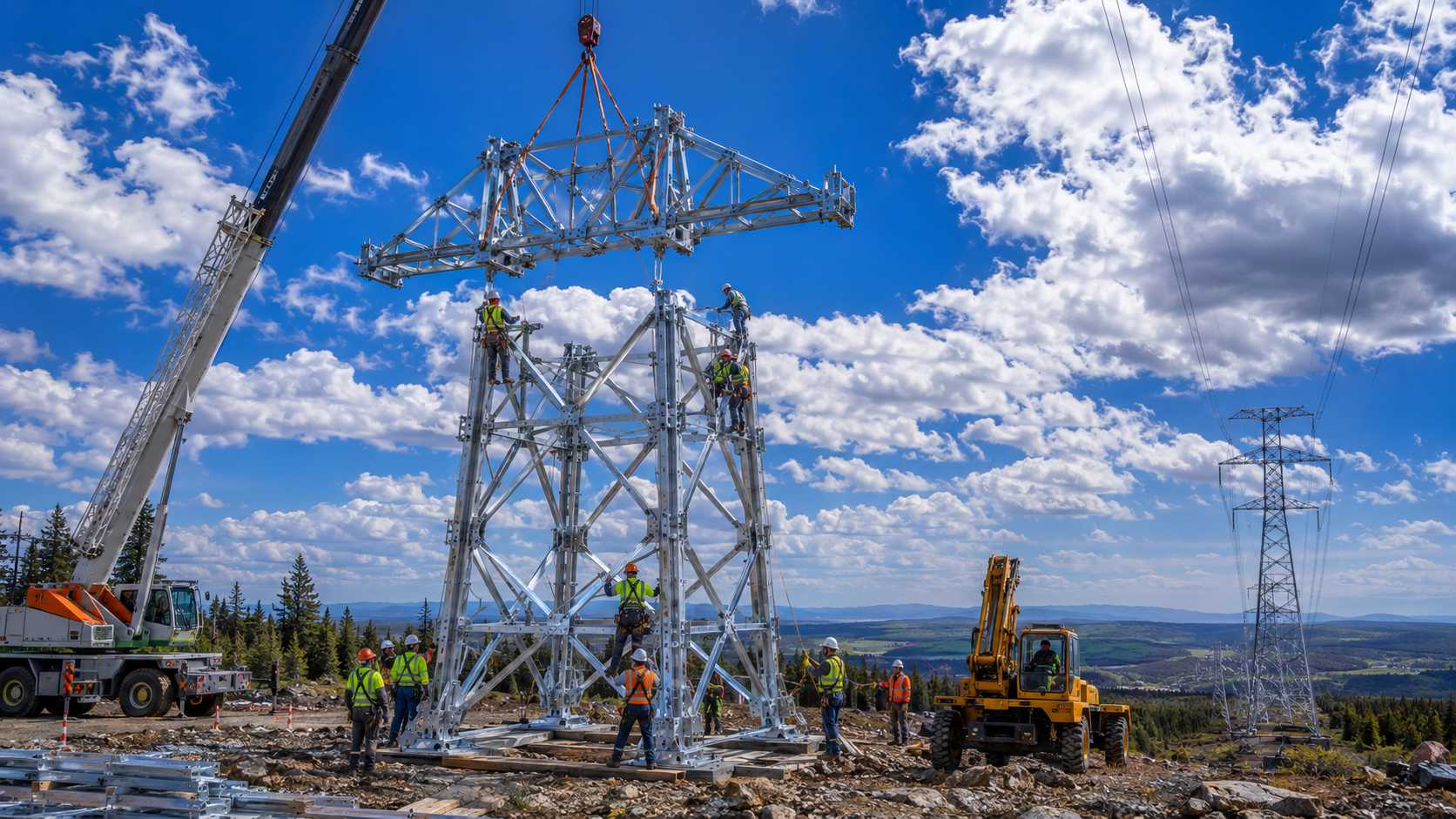
ERS structures assembled, erected, and conductors strung — restoration commences.

Outcome

Power Restoration

Transmission line restored to service. Rental continues for the agreed project duration.
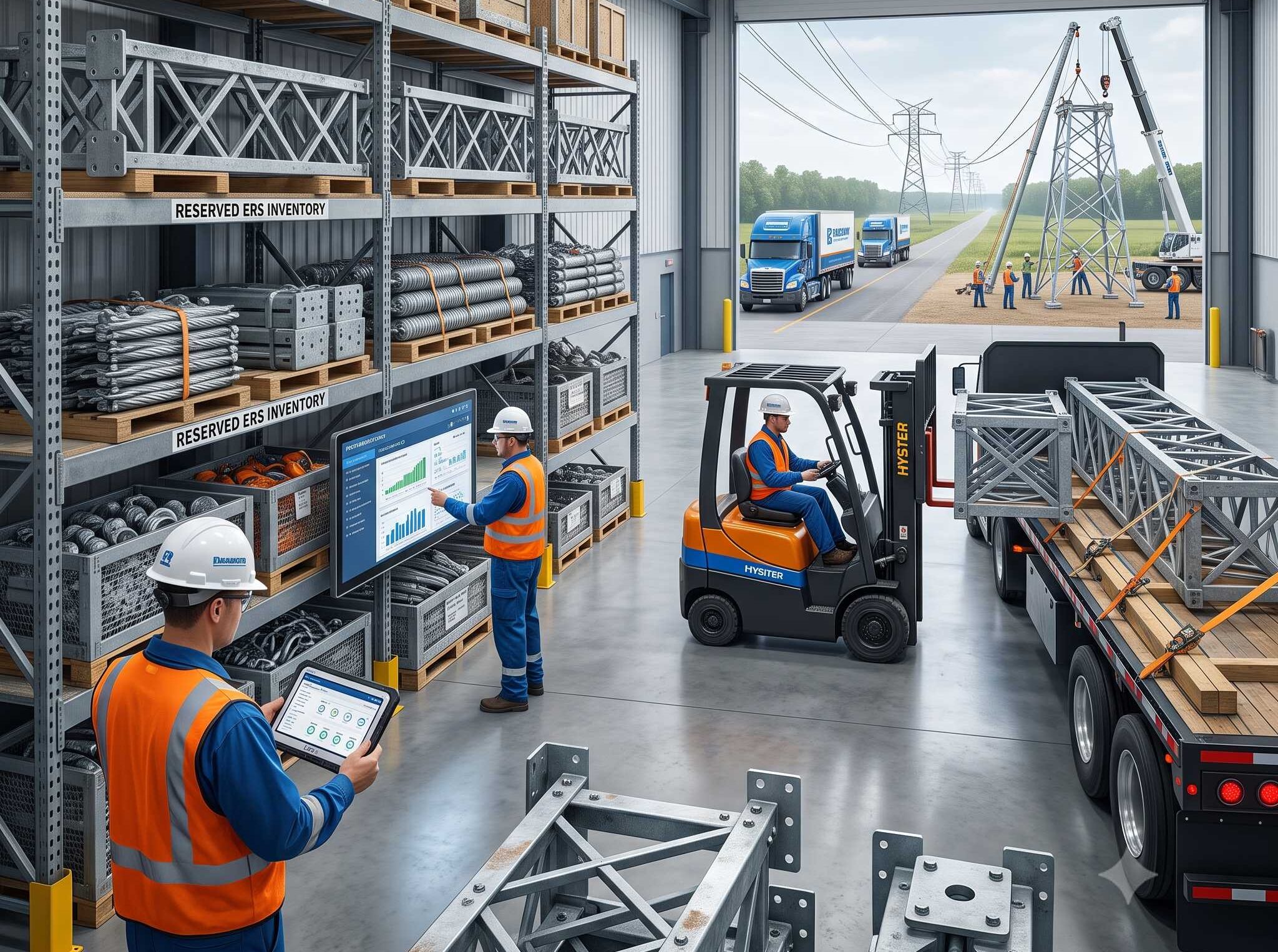
ERS Deployment Readiness Inventory
Rapid Response Inventory

Rental Capability at a Glance

Key parameters of the Hi-Tech ERS rental programme
33–800kV Full voltage range supported
5 Types ERS configurations available
2 Options Storage models — your facility or Hi-Tech
Flexible Short-term to long-term rental durations

More Than Equipment Rental

Rental customers benefit from access to the broader Hi-Tech ERS ecosystem — engineering support, installation services, and restoration expertise alongside the equipment.

01
Engineering
Design & Review
02
Manufacturing
Fabrication & QC
03
Rental Inventory
Reserved & Ready
04
Mobilization
Logistics & Dispatch
05
Installation
Assembly & Erection
06
Emergency Restoration
Grid Restored

From reserved inventory through to installation and power restoration, every stage of the rental project is supported by the same Hi-Tech engineering and operational team.

Navigate the Supply Ecosystem

Explore complete ERS supply solutions—from manufacturing to installation and support.

Why Industry Trusts Hi-Tech

Reliable manufacturing for critical transmission projects.

Frequently Asked Questions

Everything you need to know about HiTech ERS solutions, capabilities, and standards.

What are the different ERS tower configurations?

Hi-Tech ERS towers are available in five configurations: Suspension (for straight routes), Running Angle (for directional changes), Dead-End/Tension (for high-load termination and crossings), Herringbone (twin-mast multi-circuit), and Chainette (portal-style wide corridor). Each is engineered for a specific functional role within a transmission corridor.

A Suspension configuration supports conductors on straight or near-straight transmission sections where conductor loads are balanced transversely. It is the most common ERS configuration used for emergency bypass lines, reconductoring corridors, and temporary restoration routes along straight alignments.

A Running Angle configuration is used where the transmission line changes direction — at deviation angles typically between 2° and 30°. The cross arm and structure are designed to handle the resultant horizontal conductor load created by the change in line direction, making it suitable for route diversions and corridor adjustments.

A Dead-End or Tension configuration is required wherever the full longitudinal conductor tension must be transferred to the structure — at line terminations, river crossings, long spans, section boundaries, and critical restoration anchor points. These structures are significantly more robust than suspension types and are typically guyed for additional stability.

The Herringbone is a twin-mast ERS arrangement where two vertical masts are connected by cross-bracing in a herringbone pattern. This configuration provides significantly increased structural capacity, making it suitable for multi-circuit systems, heavy-duty restoration projects, and complex loading conditions that exceed the capacity of single-mast configurations.

The Chainette is a portal-style ERS structure designed for wider transmission corridors and special crossing requirements. Its wide base and horizontal top beam allow it to span greater widths than conventional mast configurations, making it the configuration of choice for portal structure replacements and wide corridor crossings.

Yes — in fact, most ERS restoration routes use multiple configurations. A typical route will use Dead-End configurations at each terminal, Suspension configurations across straight sections, and Running Angle configurations wherever the route changes direction. Configuration selection is performed section-by-section based on the engineering requirements at each location.

Configuration selection follows a structured engineering evaluation covering route geometry, tower function, conductor loading, span length, circuit arrangement, voltage level, weather loads, foundation conditions, and access constraints. Hi-Tech's engineering team performs this evaluation for each project to ensure the deployed configuration matches the specific requirements of the transmission corridor.

River crossings require Dead-End/Tension configurations on both banks of the crossing. The dead-end structures anchor the long span conductors across the water body, absorbing the full longitudinal tension generated by the extended span. Suspension towers on either side of the dead-ends carry the normal balanced loads on the approach sections.

Yes. All five Hi-Tech ERS configurations — Suspension, Running Angle, Dead-End/Tension, Herringbone, and Chainette — are available for deployment on systems from 33kV through to 800kV, including 400kV EHV and 765kV UHV corridors. Configuration dimensions, structural capacities, and insulator string arrangements are engineered to suit the specific voltage class requirements.