ERS Installation

Professional ERS Installation Services for Rapid Restoration

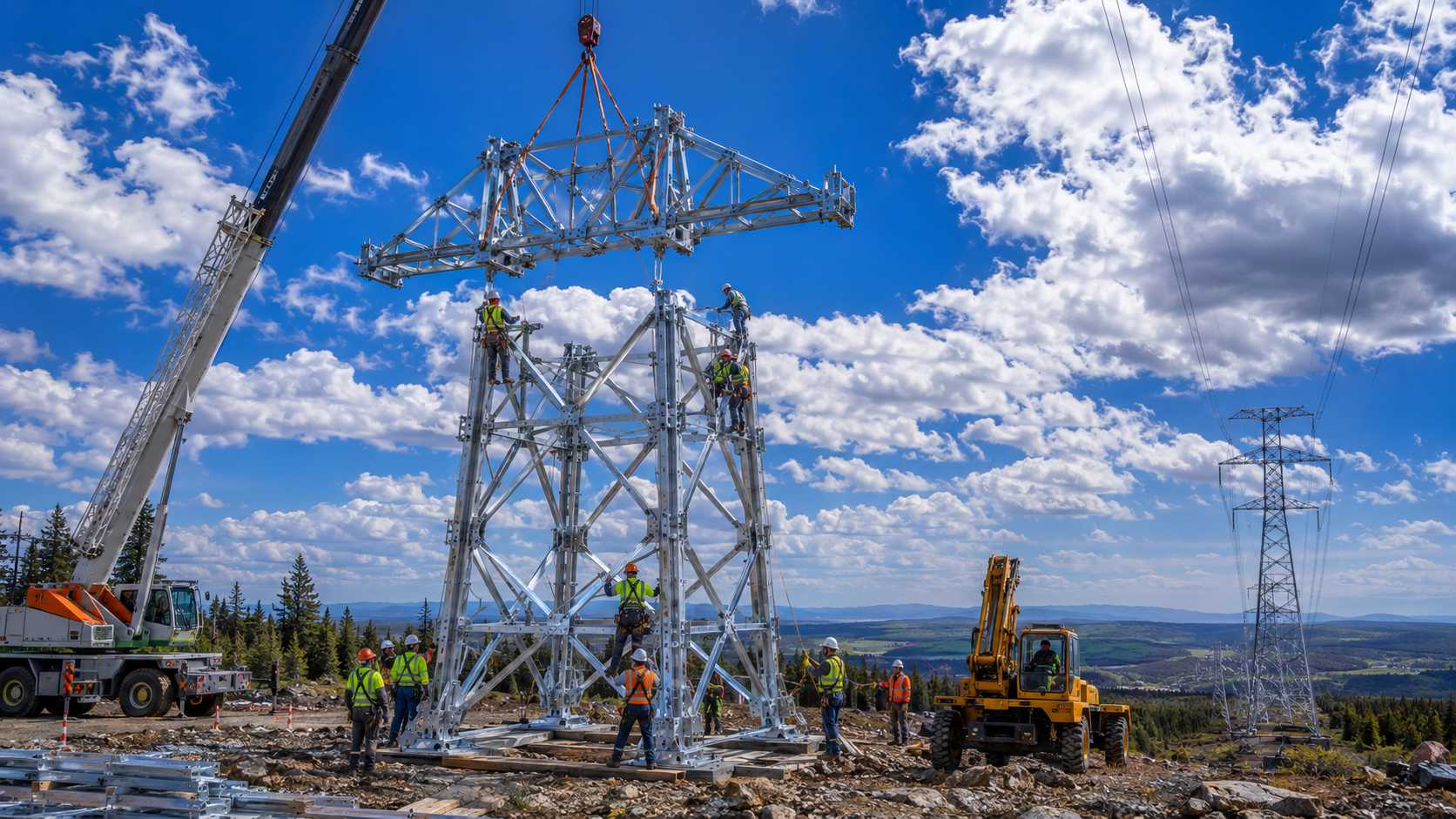
Our experienced installation teams deliver safe, efficient, and fully coordinated ERS deployments for emergency restoration, planned maintenance, and transmission infrastructure upgrades. From site preparation and tower assembly to erection, stringing, and commissioning, every installation follows proven engineering practices, strict safety standards, and precise execution to ensure rapid restoration, structural integrity, and reliable system performance.

Expert Installation Teams

Experienced crews ensure safe, accurate, and efficient ERS installation.

Rapid Field Deployment

Fast installation minimizes outages and restores transmission quickly.
Safety-Driven Execution

Strict safety standards guide every ERS installation and lifting activity.
From Site Assessment to Power Restoration

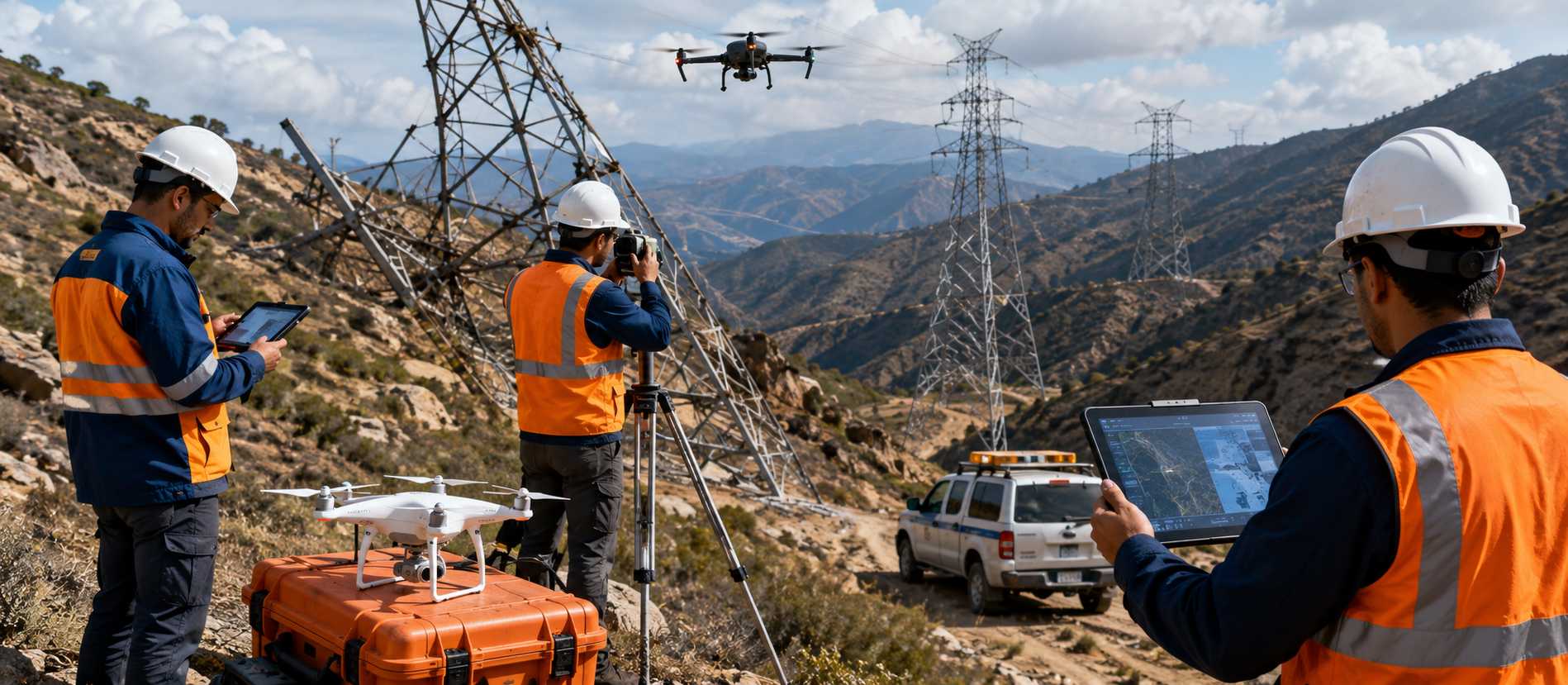
Successful ERS deployment requires more than tower installation. Every project involves engineering coordination, logistics planning, assembly, erection, conductor transfer, and commissioning activities.

01
Site Assessment
02
Mobilization
03
Material Delivery
04
Assembly
05
Tower Erection
06
Conductor Transfer
07
Commissioning
08
Power Restoration
STEP 01

Site Assessment

Comprehensive topographic surveys, soil strength testing, and site access feasibility studies before deployment.

STEP 02

Mobilization

Rapid dispatch of specialized response crews, heavy machinery, and emergency logistics units to location.

STEP 03

Material Delivery

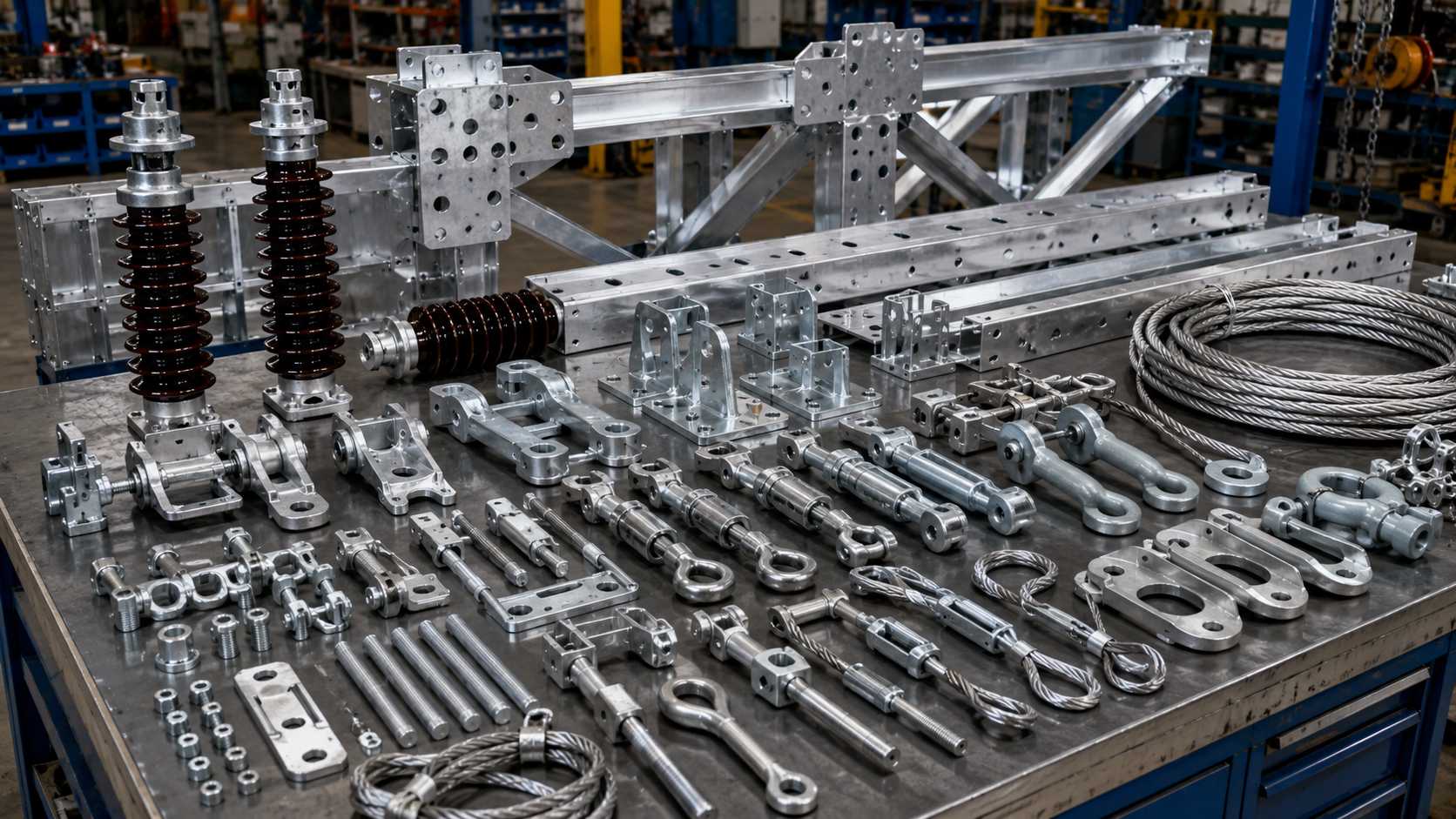
Modular ERS tower components, guy wires, anchors, and hardware safely delivered and staged on-site.

STEP 04

Assembly

Ground-level pre-assembly of high-strength structural mast sections, insulator strings, and cross-arms.

STEP 05

Tower Erection

Vertical hoisting of column modules, tensioning guy-wire supports, and securing foundation anchors.

STEP 06

Conductor Transfer

Precision stringing and mounting of existing transmission line conductors onto temporary ERS structures.

STEP 07

Commissioning

Comprehensive electrical insulation diagnostics, ground resistance testing, and safety sign-offs.

STEP 08

Power Restoration

Full line energization, grid synchronization, load transfer, and final operational handover.

From Site Assessment to Power Restoration

Successful ERS deployment requires more than tower installation. Every project involves engineering coordination, logistics planning, assembly, erection, conductor transfer, and commissioning activities.

01
Stage 01

Site Assessment

Comprehensive topographic surveys, access condition evaluation, proximity to live circuits, and restoration requirements. Site assessment establishes the foundation for every deployment decision — configuration selection, erection sequence, and safety planning all originate here.

Topographic Survey Access Evaluation Safety Planning
02
Stage 02

Engineering Verification

Review loading conditions, tower configuration requirements, span lengths, and deployment strategy against engineering specifications. Verification confirms the selected configuration meets structural and operational requirements before mobilization begins.

Load Review Span Verification Config Sign-off
03
Stage 03

Mobilization

Transport ERS structural systems, tools, erection equipment, and installation teams to the deployment site. Logistics planning ensures components and resources arrive in the correct sequence to support a continuous, uninterrupted installation workflow on site.

Crew Dispatch Equipment Transport Sequence Planning
04
Stage 04

Tower Assembly

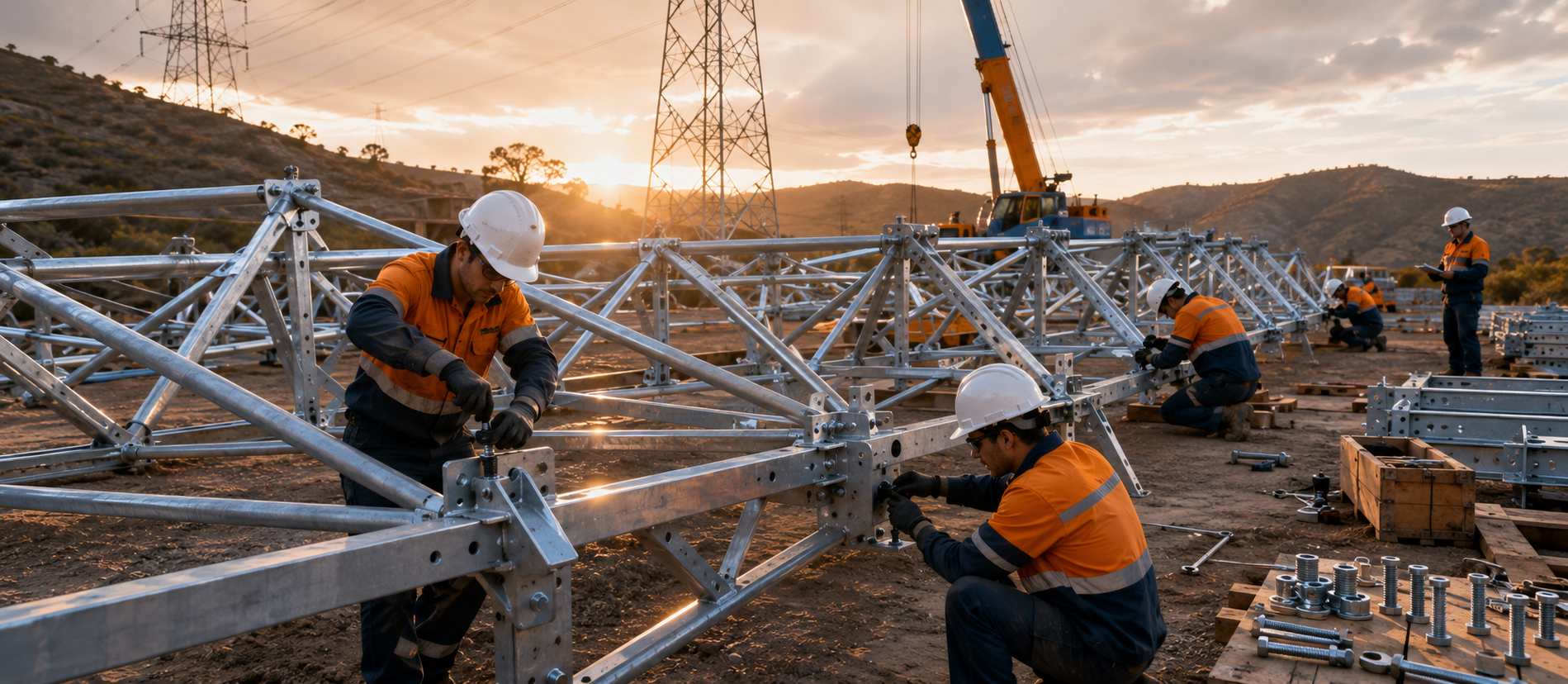
Ground level assembly of ERS structural sections, cross arms, and accessories. Assembly at ground level maximises safety, improves speed, and allows quality checks to be performed before any lifting operations begin — a key advantage of modular ERS systems.

Ground Assembly Cross Arms Pre-lift QC
05
Stage 05

Tower Erection

Install and stabilize ERS structures using appropriate lifting equipment. Foundation anchoring, guying systems, and structural alignment checks are completed at this stage to ensure each tower is correctly positioned and loaded before conductor work begins.

Vertical Hoisting Foundation Anchoring Alignment Check
06
Stage 06

Conductor Transfer & Stringing

Transfer existing conductors or string new conductors across the erected ERS structures. Conductor work is managed under controlled conditions with appropriate safety provisions for proximity to live circuits and adjacent transmission infrastructure.

Conductor Transfer Live Circuit Safety Stringing
07
Stage 07

Testing & Energization

Verify structural integrity, insulation clearances, and electrical continuity before energizing the restored line. Commissioning confirms the ERS deployment meets all operational requirements — and that the transmission corridor is ready to return to service.

Insulation Test Continuity Check Line Energization
08
Stage 08

Power Restoration

Full line energization, grid synchronization, load transfer, and final operational handover. The transmission corridor is returned to service with ERS structures in place, supporting the network until permanent tower reinstatement is completed.

Grid Synchronization Load Transfer Operational Handover

The Hi-Tech Installation Process

Engineered through seven stages for dependable deployment.

Site Assessment & Planning

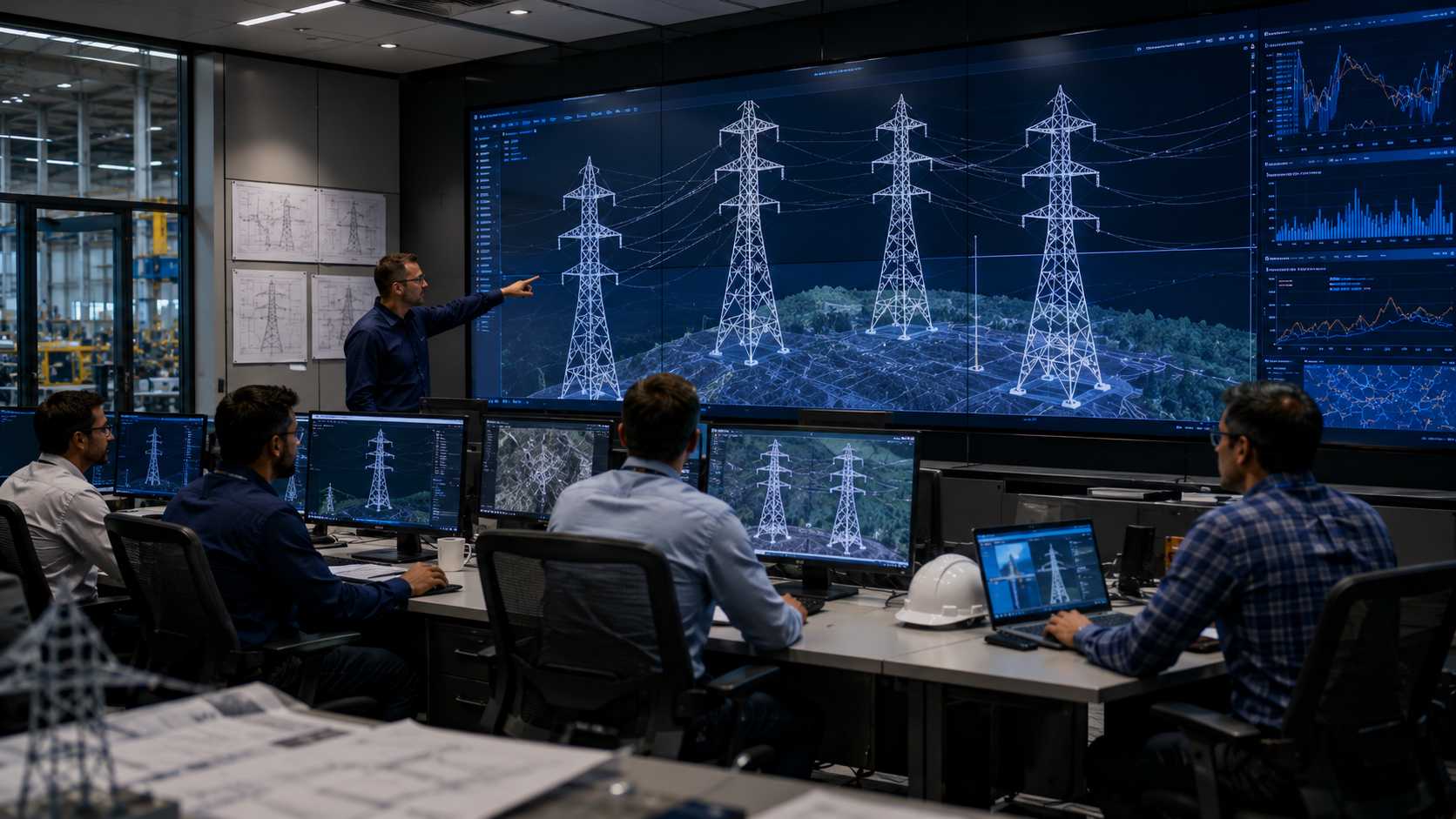
Evaluate site conditions, damaged structures, terrain, access, and live circuits to define a safe and efficient ERS deployment strategy.


Engineering Verification

Verify loading, span lengths, tower configuration, and structural calculations to confirm the ERS solution before deployment.


Mobilization

Mobilize ERS structures, equipment, tools, and installation teams through coordinated logistics for efficient site deployment.

Fabrication

Assemble ERS tower sections and cross arms safely at ground level to improve installation quality, speed, and worker safety.
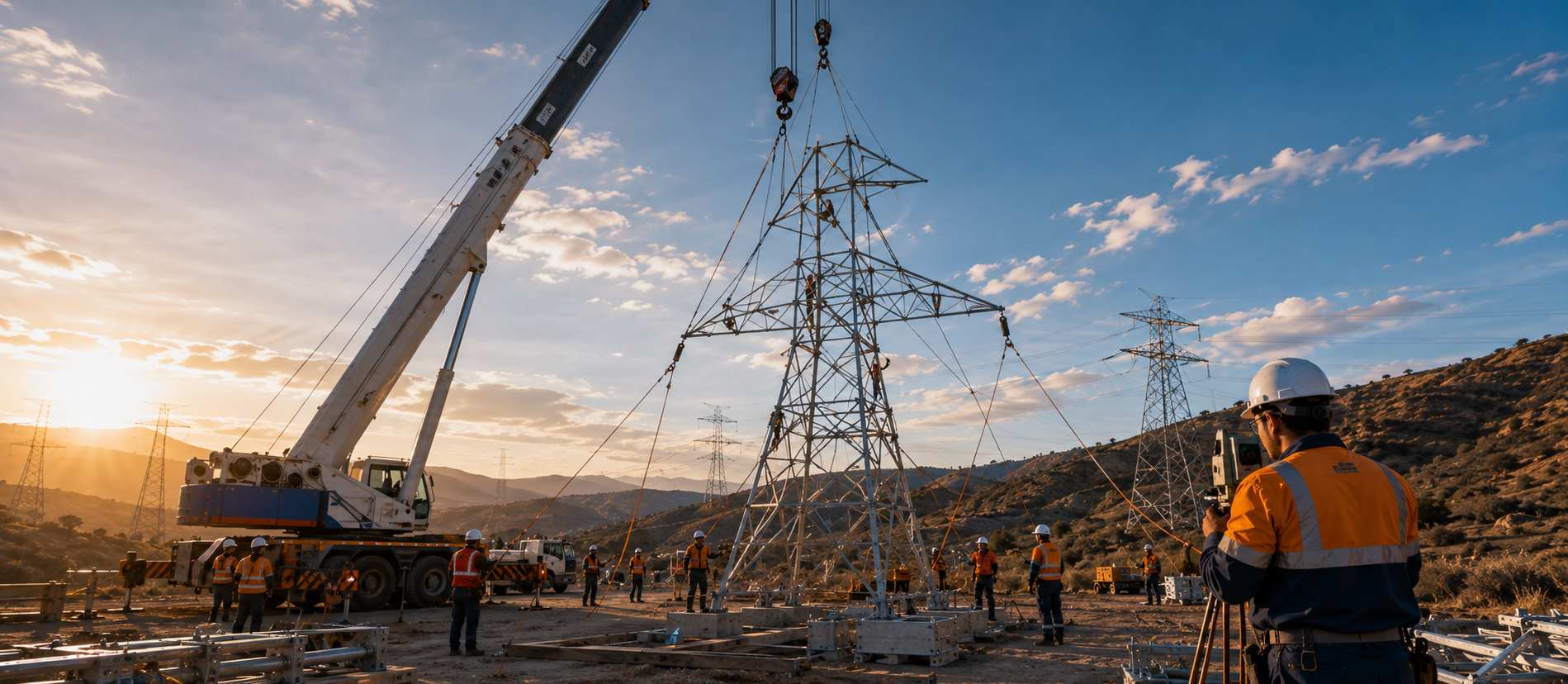

Quality Inspection

Lift, anchor, and align ERS towers using specialized equipment to ensure structural stability before conductor installation.
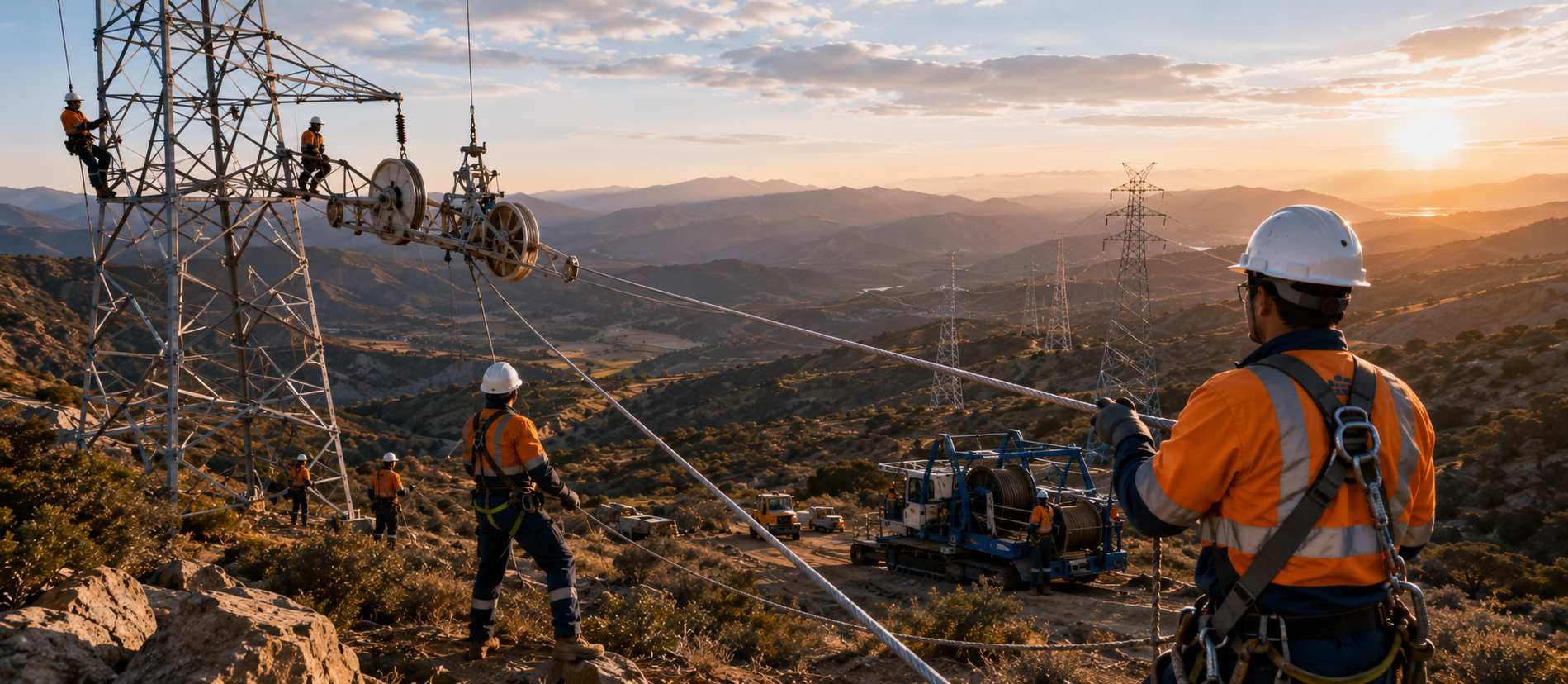

Packaging & Dispatch

Transfer or string conductors across ERS towers using controlled methods that ensure safety, precision, and reliable operation.

ERS Installation Solutions for Different Restoration Challenges

Supporting emergency and planned installations.

Tower Collapse

Rapid ERS installation restores transmission after tower collapse while permanent reconstruction is safely planned.
Storm Damage

Rapid ERS deployment restores damaged transmission corridors following cyclones, storms, and severe weather events.
Flood-Affected Corridors

Temporary ERS structures restore transmission across flood-affected corridors with safe and reliable deployment solutions.

Planned Maintenance

Install temporary ERS bypass structures to maintain uninterrupted transmission during scheduled maintenance activities.
Reconductoring Projects

ERS structures maintain power continuity during conductor replacement and transmission line reconductoring projects.

Emergency Diversions

Alternative ERS routing bypasses damaged transmission sections to restore reliable power quickly during emergencies.
Minimizing Outage Duration Through Rapid Deployment

VS

Conventional Reconstruction

Traditional tower replacement approach

  • Engineering & Design
  • Fabrication & Procurement
  • Civil & Foundation Works
  • Structure Construction
  • Power Restoration
Typical Timeline Weeks–Months

ERS Installation

Rapid deployment to restore transmission

  • Mobilization & Site Prep
  • Ground Assembly
  • Tower Erection
  • Power Restoration
Typical Timeline Days
Every hour of transmission downtime matters. ERS systems are designed to accelerate restoration timelines and reduce operational disruption across the grid.

Equipment & Resources for Successful Deployment

Successful ERS installation requires the right equipment on site, in the right sequence. Hi-Tech mobilizes a complete equipment set for every installation project.

4 Assets

Lifting Equipment

Mobile cranes for tower erection
Gin poles & manual lifting systems
Rigging and sling assemblies
Load measurement equipment
4 Toolsets

Erection Tools

Structural assembly tooling
Torque tools & bolt tensioning
Alignment & levelling equipment
Guy wire tensioning equipment
4 Rigs

Stringing Equipment

Conductor pulling & tensioning rigs
Block & tackle systems
Conductor stringing travellers
Sag measurement equipment
4 Systems

Anchoring Systems

Ground anchor assemblies
Guy wire systems & fittings
Foundation anchor hardware
Temporary anchor solutions
4 Fleet Types

Transportation Assets

Heavy transport for ERS structures
All-terrain site vehicles
Equipment transport trailers
Personnel and support vehicles
4 Modules

Site Support Equipment

Power generation and lighting
Safety and PPE equipment sets
Communication systems
Survey & measurement tools

Navigate the Supply Ecosystem

Explore complete ERS supply solutions—from manufacturing to installation and support.

Why Industry Trusts Hi-Tech

Reliable manufacturing for critical transmission projects.

Frequently Asked Questions

Everything you need to know about HiTech ERS solutions, capabilities, and standards.

How long does ERS installation take?

ERS installation timelines vary depending on project scope, terrain conditions, and the number of structures required. In straightforward scenarios, a single ERS structure can be assembled and erected within a day. Full corridor restoration projects involving multiple structures can typically be completed within days — significantly faster than conventional reconstruction timelines measured in weeks or months.

A complete ERS deployment involves site assessment and planning, engineering verification, mobilization of teams and equipment, material delivery, ground-level tower assembly, tower erection and anchoring, conductor transfer or stringing, and finally testing and commissioning before the circuit is re-energized. Hi-Tech supports all stages from initial assessment through to final handover.

Yes. Remote location deployment is one of the scenarios ERS systems are specifically designed for. The modular, lightweight nature of ERS structures allows components to be transported to sites with limited road access using trucks, trailers, and where necessary, alternative logistics methods. Hi-Tech's mobilization planning accounts for access constraints specific to each project location.

A typical ERS installation requires lifting equipment (cranes or gin poles), structural assembly tooling, guy wire and anchoring systems, conductor stringing and tensioning equipment, transportation assets, and site support equipment including safety and communication systems. Hi-Tech mobilizes a complete equipment set for each project, scaled to the scope and location of the deployment.

Yes. ERS is widely used for planned maintenance applications — bypass structures are installed alongside existing towers to allow the transmission line to remain energized while maintenance or upgrade work is carried out on the permanent structures. ERS bypass installations for planned maintenance can be scheduled well in advance, allowing full engineering verification and unhurried mobilization logistics.

Conductor transfer involves either moving existing conductors from damaged structures to the new ERS structures, or stringing new conductors across the installed ERS towers. The method depends on whether the original conductors are intact and recoverable. In emergency restoration scenarios, conductors are transferred under controlled conditions with appropriate safety provisions for proximity to adjacent live circuits.

Yes — emergency restoration is the primary application for ERS towers. They are specifically designed and engineered for rapid deployment following storm damage, tower collapse, flood events, and other transmission emergencies. The modular design, pre-engineered components, and ground-level assembly methodology allow ERS structures to be installed significantly faster than conventional tower reconstruction.

Yes — most ERS restoration projects involve multiple configurations installed along the same route. A typical deployment will combine Suspension structures for straight sections with Dead-End structures at terminals and river crossings, and Running Angle structures at route deviations. Hi-Tech installation teams are trained across all five configuration types and can execute mixed-configuration projects within a single deployment.

Hi-Tech provides complete installation support — including site assessment, engineering verification, logistics planning, field installation teams, erection supervision, quality and safety oversight, and commissioning documentation. For emergency projects, Hi-Tech can also provide rapid response coordination to accelerate mobilization and get teams on site as quickly as the situation requires.

Mobilization timelines depend on project location, scope, and the specific equipment and team configuration required. For emergency restoration projects, Hi-Tech's mobilization planning is designed to minimize time between project confirmation and teams arriving on site. Early contact and project briefing allows mobilization preparation to begin immediately — reducing total response time to the earliest practical point.